

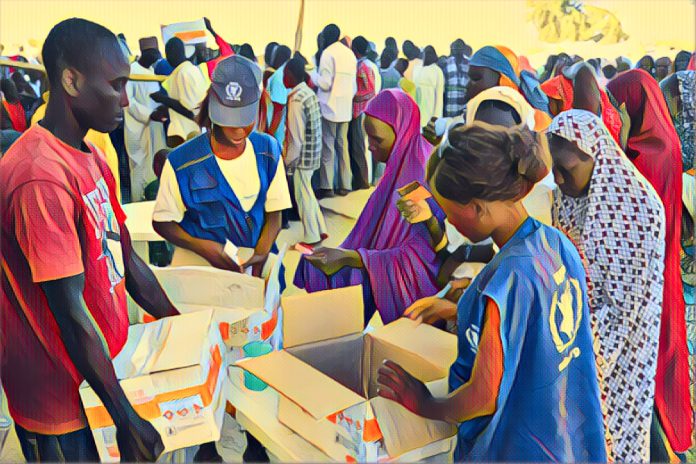
In a recent announcement, the World Food Programme (WFP) pledged unwavering support for the Zero Hunger Programme. This initiative, led by President Ahmed Bola Tinubu, operates under the Federal Ministry of Humanitarian Affairs and Poverty Alleviation.
David Stevesson, the Country Director of WFP, conveyed this commitment during a collaborative session with Dr. Betta Edu, the Minister of Humanitarian Affairs and Poverty Alleviation. A report from Vanguard highlighted Stevesson’s emphasis on the program’s success. It has already encompassed more than 2.1 million Nigerians. Moreover, there’s a hopeful plan to boost this number in partnership with the Ministry.
Furthermore, the WFP has endorsed Nigeria’s extensive efforts to reduce poverty and tackle food security challenges. Stevesson praised President Tinubu’s proactive leadership in catering to Nigeria’s humanitarian needs. He also applauded Minister Edu’s proactive measures, predicting fruitful joint endeavors ahead.
Commenting on Dr. Edu’s influence, Stevesson remarked, “Minister Edu has swiftly showcased outstanding leadership in guiding the Ministry’s strategic direction. The plans for Zero Hunger hubs, local food procurement, and the combination of cash transfers and food distributions stand out.”
Stevesson also unveiled a robust WFP commitment: “The World Food Programme plans to allocate $2.5 billion over five years to counteract hunger in Nigeria.”
In response, Dr. Edu thanked Stevesson and highlighted the grim fact that over 133 million Nigerians face multidimensional poverty. She spoke of the game-changing potential of WFP’s generous financial commitment, particularly in tackling Nigeria’s enormous hunger challenge.
Detailing the expansive reach of the “Zero Hunger” initiative, Minister Edu explained its diverse strategies. These include projects like the Homegrown School Feeding Programme, benefiting various groups, from pregnant women and young children to the elderly and refugees.
She further noted, “Over 80,000 registered refugees currently reside in our nation, with more than half situated in my home state. Our pioneering ‘humanitarian hub’ project envisions 774 hubs across all local governments in Nigeria.”
To wrap up, Dr. Edu underscored the pivotal role of WFP’s alliance in achieving the Ministry’s transformative objectives. She stressed the necessity of collective action to overcome Nigeria’s daunting challenges.

 has committed $2.5 billion to combat hunger in Nigeria as part of its Zero Hunger Programme.)