

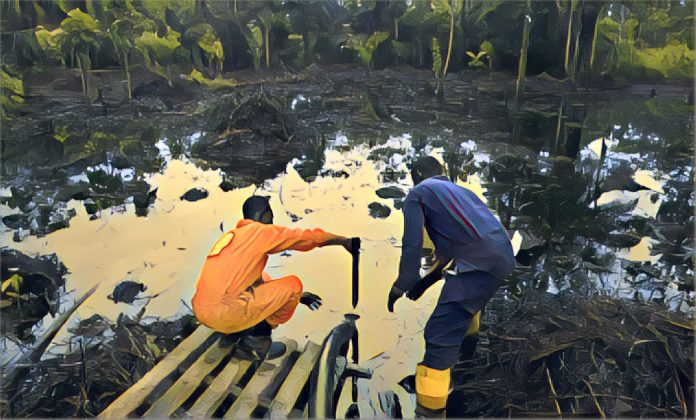
In Ibeno, an oil-rich region in Akwa Ibom State, the blessings of oil exploration now pose significant challenges.
Ibeno, historically, depended on its agricultural and marine resources. But constant oil spills now threaten its mainstays: farming and fishing.
According to a report by the Daily Post, Ibeno used to be a peaceful community with fertile lands and abundant waters. Chief Thomas Atanwa from Okoro-Utip village recalls the pre-oil era, “Freshwater, abundant fish, and rich crops defined us. But the oil companies’ promise of development turned out to be an illusion.”
Elizabeth Ifum, the Women Leader of the Opolum Community, describes the decline in agricultural and marine yields, “Oil activities have tainted everything. What represented our wealth now marks our downfall.”
Fisherman Elijah Abraham talks about his profession’s rising costs and falling returns. He says expeditions that once cost less now consume significant money with minimal fish as the outcome.
Pastor AbasiUbong John, a farmer, emphasizes the challenge of farming in the community. “After a year of planting, oil spills often prevent us from harvesting even one tuber of cassava.”
Additionally, the community faces land confiscations. Residents cite the abandoned Amakpe Refinery and various educational buildings as evidence of broken promises.
Mr. Nsoh Nsoh, Youth President of Okoro-Utip, recounts the community’s attempts, including peaceful protests, to address their issues. Yet, many have left their concerns unaddressed.
Stephen Oduware, Project Lead at HOMEF, discusses the environmental problems Ibeno faces. “The main problem lies in the balance between extraction and land rights. While the Land Use Act aims to secure lands for communities, it often gets misused.”
He also highlights the importance of Ibeno residents as primary food providers. Oduware sees HOMEF as a bridge between grassroots needs and official policies.
In conclusion, the community’s spirit dwindles while oil flows freely in Ibeno. A resource once viewed as a gift now seems more like a curse. The community fervently hopes for swift, positive changes in response to their voices.

