

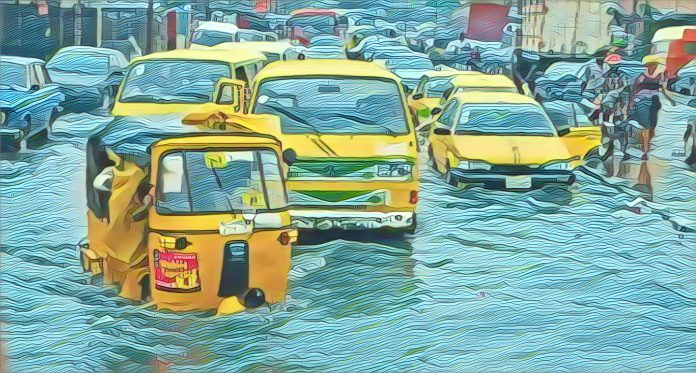
The Nigerian Meteorological Agency (NiMet) has issued a warning of heavy rainfall in 25 states and the Federal Capital Territory (FCT) on Thursday and Friday. The agency said the rainfall could cause flash floods and disrupt road transportation, especially in low-lying areas.
According to NiMet, the states that are likely to be affected are Sokoto, Zamfara, Kebbi, Katsina, Kaduna, Niger, Kwara, Oyo, Osun, Ekiti, Ondo, Kogi, Benue, Plateau, Nasarawa, Taraba, Adamawa, Gombe, Bauchi, Jigawa, Yobe, Borno, Cross River, Akwa Ibom and Rivers.
NiMet advised residents of these states to take precautionary measures and avoid activities that could expose them to the dangers of flooding. The agency also urged farmers to harvest their crops early and store them in safe places.
NiMet said the heavy rainfall was due to the interaction of moist winds from the Atlantic Ocean and dry winds from the Sahara Desert. The agency said this phenomenon is normal during the peak of the rainy season in Nigeria.
The agency said it will continue monitoring the weather and providing updates to the public. NiMet also appealed to Nigerians to support its efforts by providing feedback on its forecasts and warnings.
NiMet is not the only agency that has warned of heavy rainfall and flooding in Nigeria. The Nigeria Hydrological Services Agency (NIHSA) had earlier predicted that 121 local government areas in 28 states would experience severe flooding this year. The agency said the flooding would be caused by the overflow of rivers Niger and Benue and their tributaries.
The National Emergency Management Agency (NEMA) also advised state governments to prepare for possible floods and relocate people living in flood-prone areas. The agency said it had activated its emergency response centers and deployed relief materials to affected states.
Flooding is a recurrent problem in Nigeria that causes yearly loss of lives and properties. Experts have attributed the problem to poor urban planning, deforestation, climate change, and inadequate drainage systems. They have called for more investment in flood control measures and environmental protection.
Despite the challenges posed by flooding, some Nigerians have also seen opportunities in it. Some farmers have used the excess water to irrigate their crops and boost their yields. Some fishermen have also increased their catch and income from the flooded rivers and lakes.
Source: Tribune Online

