

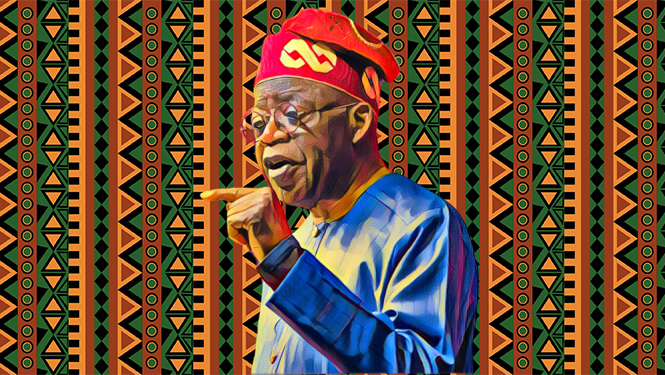
Nigeria’s President Bola Tinubu has announced a provisional wage increase of N35,000 for all federal government workers for the next six months. The decision came after consultations with the labor unions, who had threatened to go on strike over the removal of fuel subsidy on petrol. The government said the wage award was part of its efforts to cushion the impact of the subsidy removal, which had led to a hike in fuel prices and transport fares.
The government also promised to provide Compressed Natural Gas (CNG) buses for public transportation, funds for micro and small-scale enterprises, and waivers on VAT on diesel. In addition, the government said it would pay N75,000 to 15 million households at N25,000 per month, for a three-month period from October to December. The labor unions welcomed the government’s offers and agreed to suspend their planned strike action. They also urged the government to address the lingering dispute between the Road Transport Employees Association of Nigeria (RTEAN) and the National Union of Road Transport Workers (NURTW) in Lagos State.
The meeting, which was chaired by the Chief of Staff to the President, Femi Gbajabiamila, had the participation of the governors of Kwara and Ogun states, as well as several ministers and heads of agencies. The removal of fuel subsidy in Nigeria has been a contentious issue for decades, as many Nigerians see it as a lifeline for the poor. However, the government has argued that the subsidy was unsustainable and prone to corruption, and that the funds saved from it would be used for infrastructure and social development.
The government has also assured Nigerians that the deregulation of the petroleum sector would attract more investments and create more jobs. The wage increase for federal workers is expected to boost consumer spending and stimulate the economy, which has been hit hard by the COVID-19 pandemic and the fall in oil prices. The government has also appealed to the private sector and the state governments to follow suit and increase the salaries of their workers.
Nigerians have expressed mixed reactions to the government’s moves, with some praising them as bold and progressive, and others criticizing them as inadequate and temporary. The government has urged Nigerians to be patient and supportive of its policies, saying they are aimed at improving the welfare and security of the citizens.
Source: Vanguard

