

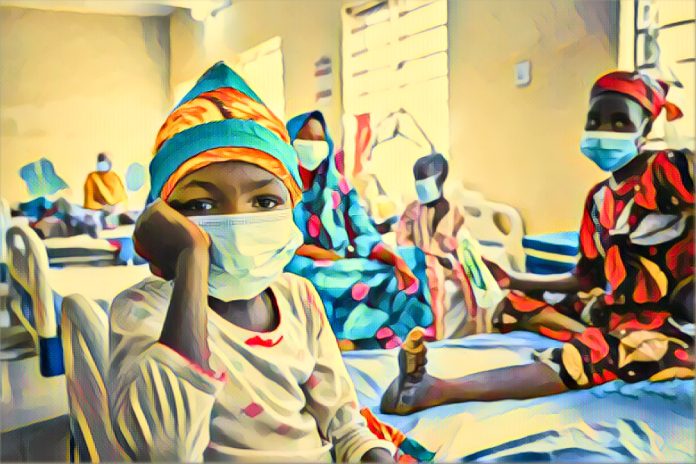
The National Primary Health Care Development Agency (NPHCDA) reported that Kaduna State has experienced 20 fatalities from diphtheria, with 156 confirmed cases.
Dr. Faisal Shuaib, the Executive Director and CEO of the NPHCDA and Co-Chair of the Federal Task Team on Diphtheria, addressed the media after his visit to the Kaduna Diphtheria Treatment Centre located at the Barau Dikko Teaching Hospital. He emphasized the importance of assessing the diphtheria outbreak, which has significantly impacted various regions of Kaduna.
Kaduna, an essential hub in Nigeria’s northern region, is unfortunately emerging as one of the top seven states grappling with a high incidence of diphtheria cases. “In our observation, we’ve encountered a range of mild to moderate cases at the Barau Dikko Teaching Hospital. Typically, after initial assessments and treatments, these patients are then relocated to hospitals that specialize in infectious diseases for more intensive care,” explained Dr. Faisal Shuaib.
The diphtheria outbreak’s initial signs were detected back in March in Kaduna. The rapid spread of the disease culminated in around 150 individuals contracting it and, tragically, 20 lives lost. “When considering the nature of diphtheria, these statistics are deeply concerning,” Dr. Shuaib expressed with gravity.
He further brought to light an underlying issue: a considerable number of patients only opt for medical intervention when the disease has significantly progressed, which can potentially worsen the overall scenario.
Dr. Shuaib underscored the pivotal role the media plays in such crises. “Now more than ever, the media needs to assume an assertive stance, ensuring that the populace is well-informed not just about the current outbreak but also about preventive measures against diphtheria.”
He took the opportunity to stress a crucial fact that diphtheria, despite its severe implications, is a preventable disease. Alas, a significant proportion of the affected population, “approximately 80%, to be precise,” Dr. Shuaib lamented, “had bypassed their essential vaccinations.”

