

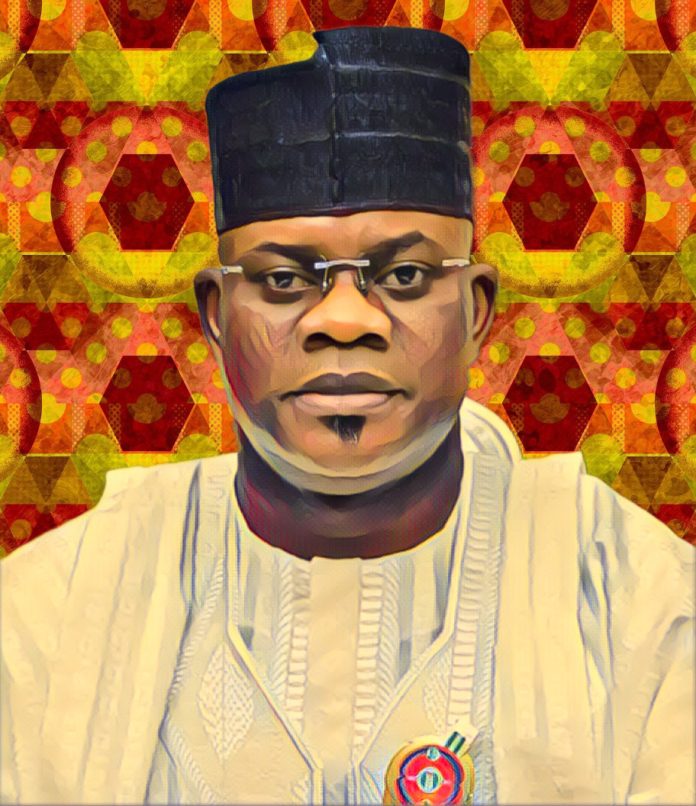
In a sweeping and unprecedented move, Kogi State Governor, Alhaji Yahaya Bello, has taken drastic action within the state’s traditional leadership structure. The governor announced the deposition of four traditional rulers, including the high-profile removal of the Ohimege Igu, Konto-Nkarfe, Alhaji Abdulrazaq Koto. This decision, delivered shortly after a meeting with the state executive committee, marks a significant shift in the state’s traditional governance.
Governor Bello, in a statement that followed these surprising developments, explained that these decisions were made in adherence to the Traditional and Chieftaincy Laws of Kogi State. Notably, the deposed Ohimege Igu, Koto, was not only removed from his position but also banished to Rijau Local Government Area in Niger State.
In a bid to ensure continuity and stability, Governor Bello appointed Alhaji Salihu Seidu, known as SAS, as the new Ohimege, directing his immediate turbaning to avoid any governance vacuum. Additionally, Alhaji Ahmed Anaje, formerly the Ohi of Okenwen, was appointed as the new Ohinoyi of Ebiraland, signaling a reshuffling of key traditional roles in the state.
This shake-up in the traditional hierarchy also affected other rulers. The Olu Magongo of Magongo, Sam Bola Ojo, and the Obobanyi of Emani, Samuel Adayi Onimisi, were similarly deposed and ordered to be banished to various locations in Niger State. The governor’s actions are indicative of an assertive approach to resolving the controversies that have long plagued the selection process of these traditional posts.
The governor further addressed the contentious issue surrounding the “Obobanyi of Ihima” title. Noting that the title is currently the subject of a legal dispute, he declared the reversion of the stool to its original status, with the present occupant remaining deposed until a court decision is reached.
In a series of additional appointments, Governor Bello demonstrated his commitment to restructuring the traditional leadership in Kogi State. He announced the appointment of Alhaji Ibrahim Gambo Kabir as the new Maigari of Lokoja, a move that reflects the governor’s intention to bring fresh perspectives into the leadership dynamics of the state’s traditional institutions.
Another key appointment made by the governor was that of Alhaji Dauda Isah as the Maiyaki of Kupa. This appointment, alongside others, was part of a broader strategy to resolve longstanding disputes and controversies surrounding the selection and recognition of traditional rulers in the state.
Governor Bello’s decisions, although bold and unprecedented, have not been without their critics. Some community leaders and members of the affected communities have expressed concerns over the manner and implications of these depositions and appointments. They argue that such significant changes in traditional leadership could disrupt the cultural and social equilibrium within their communities.
However, the governor’s office has responded to these concerns by emphasizing the legal and procedural compliance of the governor’s actions. According to the statement from the governor’s office, all decisions were made in strict adherence to the state’s Traditional and Chieftaincy Laws, ensuring that due process was followed.
Furthermore, the governor underscored the importance of these changes in fostering peace, order, and good governance in the traditional institutions of Kogi State. He highlighted that these decisions were necessary to address the numerous challenges and controversies that have beset the traditional councils, thereby hampering their effectiveness and credibility.
To ensure a smooth transition and the continuity of traditional governance, the governor has instructed the newly appointed rulers to prioritize the welfare and development of their respective domains. He has also called for unity and cooperation among all stakeholders in the traditional institutions to support these new leaders in their roles.
In conclusion, the sweeping changes implemented by Governor Yahaya Bello represent a bold step in redefining the traditional leadership landscape in Kogi State. While these decisions have sparked various reactions, the governor maintains that they are in the best interest of the state’s traditional governance and overall development. As the new appointees assume their roles, all eyes will be on Kogi State to observe the impact of these significant changes in its traditional leadership structure.

