

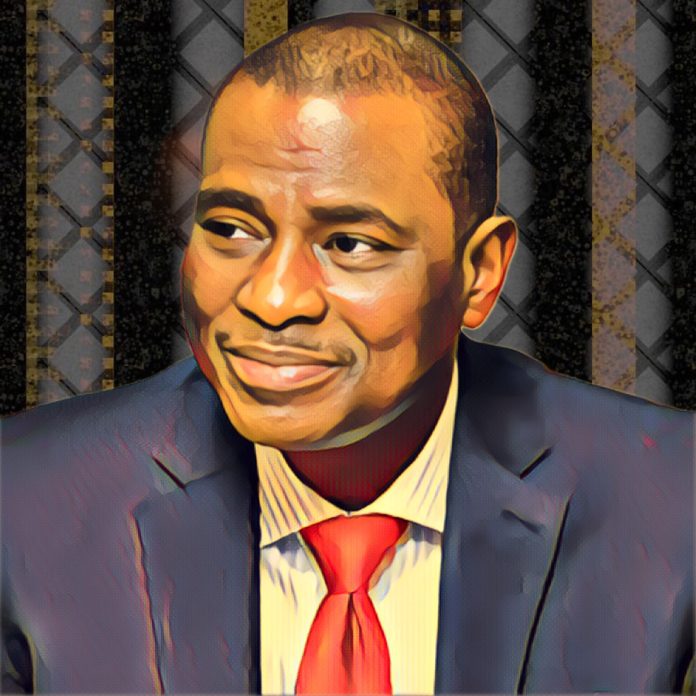
Nigeria’s President Bola Tinubu has been praised by the chief executive officer of Airtel Africa, Segun Ogunsanya, for his foreign exchange policy that has made planning easier for businesses in the country.
Ogunsanya, who met with the president at the Presidential Villa on Wednesday, said that the network provider was also planning to set up a data center in the country that would be one of the largest in Africa.
FX Liquidity Improves
Ogunsanya said that the president’s policy of allowing market forces to determine the exchange rate of the naira had improved the liquidity of foreign currency and reduced uncertainty for investors.
“We had massive issues with liquidity FX; we still have some issues with FX liquidity, but at least slightly more predictable than it was a couple of months ago. It makes it easier for us to do better planning,” he said.
He added that the president had assured him that Nigerians should expect the best from his government.
Data Center Project
Ogunsanya, who is due to retire in six months, also disclosed that his company was working on a data center project that would serve all the multinationals in the country and some foreign countries.
“The data center will be one of the largest data centers in Africa, it is going to serve all the multinationals in the country. So it’s going to serve some of the Foreign countries. Certainly, it is going to be one of the largest in Africa,” he said.
He said that the project had not been finalized yet, but the land and the consultants had been secured and the ground-breaking would happen soon.
Airtel Africa’s Growth
Airtel Africa is one of the leading telecommunications companies in the continent, with operations in 14 countries and over 120 million customers.
The company reported a revenue growth of 14.2% in the third quarter of 2023, driven by strong performance in Nigeria, East Africa, and Francophone Africa.
The company also announced a partnership with Mastercard to provide digital payment solutions to its customers across Africa.
The meeting between the president and the Airtel boss came at a time when Nigeria’s economy was recovering from the impact of the global pandemic and the recession of 2022.
The International Monetary Fund (IMF) projected that Nigeria’s economy would grow by 3.4% in 2023, after contracting by 1.8% in 2022.
The IMF also commended the president’s economic reforms, especially the removal of fuel subsidies and the unification of the exchange rate.
The president has vowed to continue to implement policies that would enhance the business environment, create jobs, and lift millions of Nigerians out of poverty.
Source: Vanguard

