

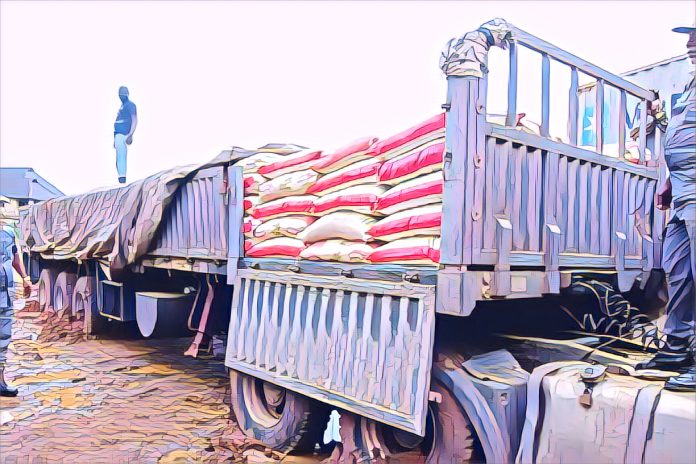
Amid escalating food prices and economic challenges, the Nigeria Customs Service (NCS) has ramped up efforts to curb food smuggling, seizing 15 trucks loaded with food items in Sokoto State. The operation, targeting vehicles along the Gwadabawa-Illela road, forms part of a broader crackdown aimed at stabilizing commodity costs within the country. Spokesperson Abubakar Chafe confirmed the interceptions, underscoring the government’s commitment to addressing the root causes of inflation in food prices.
The crackdown extends beyond Sokoto, with recent operations on the Sokoto-Kebbi road leading to significant seizures, including a consignment of sex enhancement drugs valued at N19.6 million. Coordinating Comptroller, Kolapo Oladeji, emphasized the critical situation, with Nigerians still smuggling food across borders despite severe shortages and soaring living costs.
Further illustrating the issue, police operatives in Port Harcourt arrested five suspects for diverting bags of wheat intended for Internally Displaced Persons (IDP) camps. The swift action led to the recovery of 1,238 bags, highlighting the government’s determination to safeguard essential supplies for the vulnerable.
The Sokoto State Council of the Nigeria Union of Journalists (NUJ) has called for increased vigilance at border points to prevent further exacerbation of food scarcity. Meanwhile, Katsina State has initiated a task force to enforce bans on food hoarding, signaling a nationwide effort to ensure food security and affordability.
The article also touches on public reactions to the economic strain, including protests and calls for government accountability. In Ilorin, a viral video of protestors outside the Emir’s palace drew attention to the growing discontent among citizens. In contrast, the Southeast has remained relatively calm, with the Ohanaeze Ndigbo commending the region’s restraint amidst national upheavals.
As Nigeria grapples with these challenges, the APC has defended President Tinubu’s measures to alleviate hardship, contrasting sharply with the PDP’s critique of the government’s handling of the economic situation. The APC asserts that the administration’s reforms are laying the groundwork for recovery and prosperity, despite the immediate pain felt by the populace.

