

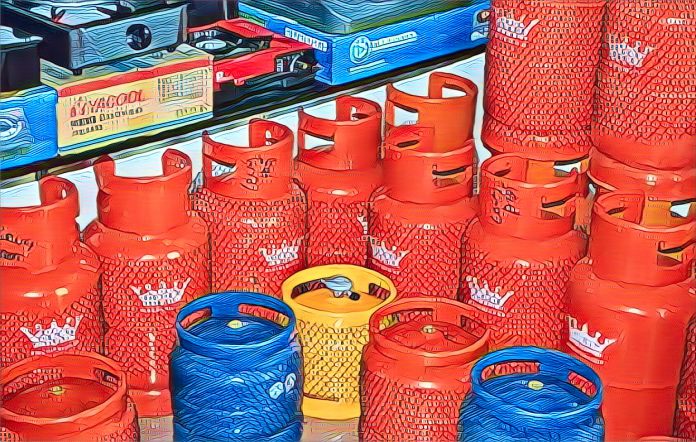
In a decisive move to combat the escalating cost of cooking gas in Nigeria, the Federal Government has implemented a ban on the exportation of Liquefied Petroleum Gas (LPG), commonly known as cooking gas. This strategic decision aims to bolster domestic supply and subsequently drive down prices, offering relief to households across the nation.
The ban comes in response to a significant rise in cooking gas prices, with the cost to refill a 12.5kg cylinder reaching as high as N18,000 in various states, including Abuja and Lagos. This marks a sharp increase from prices observed in November of the previous year, when the same amount of gas was available for less than N9,000.
The Nigerian Association of Liquefied Petroleum Gas Marketers had earlier warned that prices could soar to N18,000 per 12.5kg cylinder if no action was taken to address the continuous hikes. In response, the Minister of State for Petroleum Resources (Gas), Ekperikpe Ekpo, established a committee in November 2023, led by Farouk Ahmed, Chief Executive of the Nigerian Midstream and Downstream Petroleum Regulatory Authority, to explore solutions to this pressing issue.
Despite these efforts, the price of LPG has continued to rise, prompting some households to resort to using charcoal as an alternative cooking fuel. Ekpo disclosed that major LPG producers, including international oil companies like Mobil, Shell, and Chevron, have been instructed to cease exporting the commodity to help stabilize domestic prices.
The government’s intervention also includes the removal of all taxes and levies on the importation of gas-related equipment, aimed at reducing the cost burden on consumers. “We are ensuring that all LPG produced within the country is used domestically. This increase in supply is expected to lead to a significant price drop,” Ekpo stated during an internal stakeholders’ workshop in Abuja.
The cost of cooking gas had doubled from around N700 per kilogram in November 2023 to approximately N1,400/kg, with industry operators cautioning that prices could escalate further without governmental intervention.
Ekpo’s ongoing discussions with both regulators and gas producers reflect a concerted effort to address the root causes of the price surge and find sustainable solutions. “Our daily meetings with gas producers like Mobil, Chevron, and Shell give us hope for a turnaround. This engagement is crucial to understanding the challenges at hand so we can resolve them effectively,” Ekpo added. By prioritizing local consumption over exports, we aim to ensure that every Nigerian family can access affordable cooking gas, a basic necessity for daily life.

