

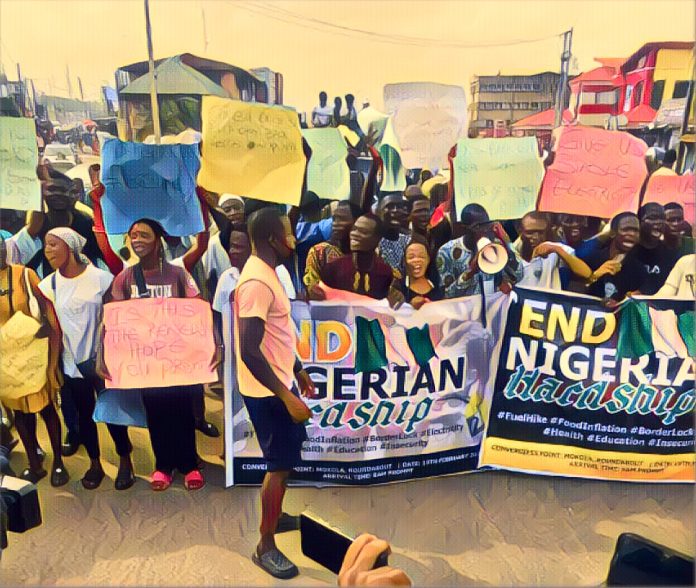
The abolition of fuel subsidies by President Bola Tinubu on May 29, a policy anticipated to elevate millions of Nigerians out of poverty by significantly increasing revenue for both the federal and sub-national governments, has yet to yield the expected transformative effects across the states. Despite the influx of substantial revenue streams following the subsidy removal, tangible improvements in living standards and economic development remain elusive in many states.
Investigations by LEADERSHIP have uncovered that, despite the internal revenue generated by the states, which amounts to billions of naira, they collectively received over N5.108 trillion from the Federal Account Allocation Committee (FAAC) in the span of eight months—from July 2023 to February 2024. This period marks the time when the financial benefits of the subsidy removal began to materialize.
This staggering total revenue of N5.1 trillion includes N2.69 trillion directly from the federation account, N1.975 trillion disbursed to the local government accounts (which are under the control of the state governors), and an additional N441.929 billion as 13 percent derivation revenue from solid minerals, allocated to certain states.
Despite the subsidy removal leading to an average monthly FAAC disbursement increase to approximately N1.09 trillion from the prior average of N620 billion, the anticipated upliftment in the standard of living and per capita income of residents across the states has not materialized. This shortfall is notably evident in the sluggish or non-implementation of the agreed N30,000 minimum wage for public workers, a critical measure of economic welfare. As of the latest assessments, only about 10 states have begun implementing this wage standard. This is particularly concerning given the backdrop of increased revenue, with many states still struggling to meet the previously set wage rate amidst calls from labor unions for a wage increase of over 200 percent.
The detailed analysis of the FAAC allocations during the reviewed period highlights the disparity between increased revenue and its impact on economic welfare. For instance, in July—the month marking the first receipt of post-subsidy income—a total distributable revenue of N907.054 billion was shared among the three tiers of government. Of this, the states received a substantial sum of N561.49 billion from the federation account. Yet, the expected positive outcomes of such financial inflows, in terms of improved public services, infrastructure development, and economic upliftment, remain largely unobserved.
This scenario underscores a significant disconnect between increased government revenue and tangible developmental progress within the states. The anticipation that subsidy removal would serve as a catalyst for economic growth and poverty alleviation has been met with the reality of inefficient utilization of resources, a lack of accountability, and challenges in governance that hinder the translation of increased fiscal capacity into meaningful improvements in the lives of citizens.
The situation calls for a critical examination of the governance structures and fiscal management practices at the state level. It emphasizes the need for transparency, accountability, and strategic planning in the allocation and utilization of financial resources to ensure that the potential benefits of increased revenue streams are fully realized. Moreover, it highlights the importance of implementing policies and programs that directly address the needs of the populace, enhance economic development, and improve living standards.
In light of these findings, there is a pressing need for state governments to reevaluate their fiscal strategies and governance mechanisms. This includes adopting more inclusive and participatory approaches to budgeting and expenditure, strengthening oversight and accountability measures, and prioritizing investments in key sectors such as education, healthcare, and infrastructure that have direct impacts on the well-being and economic prospects of their citizens.
Furthermore, the effective implementation of the minimum wage across all states emerges as a critical step towards alleviating economic hardship and demonstrating a commitment to improving the livelihoods of public workers and, by extension, the broader population. This necessitates a concerted effort among state governments, labor unions, and other stakeholders to find sustainable solutions to wage issues and broader economic challenges.
In conclusion, while the removal of fuel subsidies was envisioned as a policy shift that would herald a new era of economic prosperity and development for Nigeria, its execution and the subsequent management of increased revenues at the state level have not yet fulfilled these expectations. The path forward requires a recommitment to principles of good governance, accountability, and strategic investment in the public good to ensure that the potential benefits of this policy change are fully realized for all Nigerians.

