

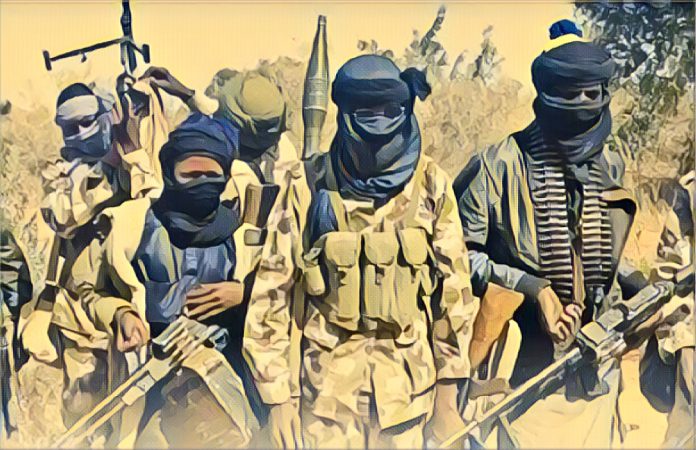
Katsina, Nigeria – The people of Katsina State are living in fear as bandits continue to launch deadly attacks on villages, farms, and highways, killing, kidnapping, and looting with impunity.
The escalating violence has prompted the House of Representatives to call on President Bola Tinubu to direct the security agencies to sustain their pressure on the criminals and restore peace and order in the state.
The lawmakers made the appeal on Wednesday, following a motion of urgent public importance moved by Sada Soli, who represents Jibia/Kaita Federal Constituency in Katsina State.
Soli expressed concern about the devastating impact of banditry on the lives and livelihoods of his constituents, adding that the situation was near being out of control.
He said that some gangs of armed bandits from neighboring Kaduna and Zamfara States were making efforts to gain control over some communities in Katsina State, and that the security agencies were yet to take immediate and decisive action to address the challenge.
Soli also commended the troops for their successful operation on Monday, which led to the killing of two notorious bandits, while others fled with gunshot wounds.
He urged the National Emergency Management Agency and the Ministry of Humanitarian Affairs and Poverty Alleviation to urgently provide humanitarian assistance to the affected communities and support the displaced persons across the state.
The plight of the people
The motion by Soli echoed the plight of many residents of Katsina State, who have been bearing the brunt of the banditry for years.
According to a report by the Nigeria Security Tracker, a project of the Council on Foreign Relations, Katsina State recorded 1,072 fatalities from violent incidents involving bandits, security forces, and vigilantes in 2023, the highest among the 36 states and the Federal Capital Territory.
The report also showed that the state had 1,014 kidnappings in the same year, second only to Zamfara State, which had 1,026.
The bandits, who are mostly armed with sophisticated weapons, motorcycles, and camels, have been raiding villages, burning houses, stealing cattle, and abducting people for ransom.
They have also been attacking travelers and commuters on major roads, especially the Katsina-Kano, Katsina-Jibia, and Katsina-Funtua highways, creating a climate of fear and insecurity.
Some of the worst-hit local government areas in the state are Batsari, Danmusa, Dandume, Faskari, Jibia, Kankara, Sabuwa, Safana, and Zurmi.
The impact of the banditry on the socio-economic activities of the state has been enormous, as many farmers have abandoned their farms, traders have closed their shops, and students have dropped out of school.
The state government has tried various measures to address the problem, such as dialogue, amnesty, and deployment of security forces, but none has yielded lasting results.
The way forward
Many analysts and stakeholders have called for a holistic and multi-faceted approach to tackle the banditry in Katsina State and other parts of the country.
They have suggested the need for improved intelligence gathering, enhanced coordination among the security agencies, increased funding and equipment for the security forces, and more community involvement and support.
They have also stressed the importance of addressing the root causes of the banditry, such as poverty, unemployment, illiteracy, environmental degradation, and social injustice.
Many have urged the federal and state governments to invest more in education, health, agriculture, infrastructure, and youth empowerment, and to ensure good governance, accountability, and respect for human rights.
They have also appealed to the religious and traditional leaders, the civil society, and the media to play their roles in promoting peace, dialogue, and tolerance among the people.
Despite the challenges, many residents of Katsina State have not given up hope for a better future. They have expressed their faith in God and their confidence in the authorities to overcome the banditry and restore normalcy in the state.
Source: Punch

