

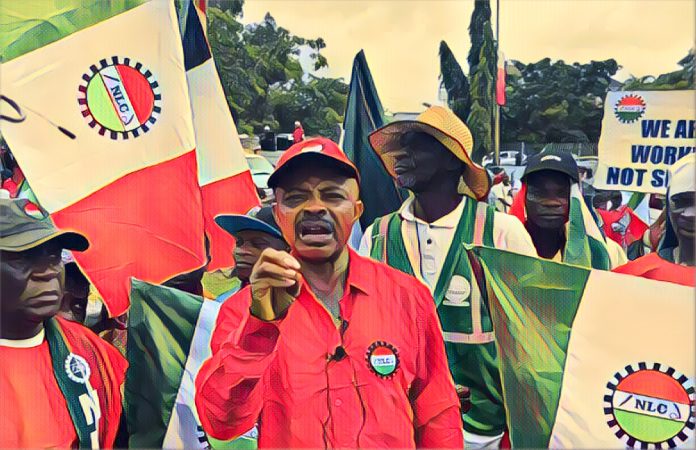
In Nigeria, the contentious dialogue between the government and the Nigeria Labour Congress (NLC) continues over the new minimum wage proposal, with neither party fully satisfied with the ongoing negotiations. Amidst rising economic pressures, the NLC has vehemently rejected the government’s proposal of N48,000 as woefully insufficient, insisting on a significant increase to cope with the soaring cost of living. This debate unfolds in the backdrop of a nation grappling with inflation and a citizenry burdened by escalating prices.
The current standoff was triggered during a critical meeting of the Tripartite Committee on National Minimum Wage, where union leaders walked out in frustration over the government’s proposed figures. The private sector’s slightly higher offer of N54,000 did little to quench the unions’ thirst for a fair wage, setting the stage for intensified negotiations. The NLC has proposed a staggering N615,000, calculated based on the barest living necessities, which starkly contrasts with the government’s figures.
Amidst these discussions, calls for rationality and moderation are being echoed by influential voices such as the Primate of the Church of Nigeria Anglican Communion, Most Rev. Henry Ndukuba. He advised the government to consider the severe inflation impacting daily lives and urged the NLC to temper its demands to avoid fueling further economic instability. His caution reflects a broader concern that an unfeasible wage increase might trigger rampant inflation, worsening the economic plight rather than alleviating it.
On the flip side, proponents of a higher minimum wage argue that the current economic policies and government spending patterns do not reflect a genuine resource constraint but rather mismanagement and misplaced priorities. Critics point to the government’s lavish expenditures on infrastructural megaprojects and luxury imports for officials while basic public services and workers’ welfare languish. This juxtaposition of governmental affluence against public sector austerity fuels the discontent among labor unions and the general populace.
Adding complexity to the debate is the media’s role in shaping public perception and the legal stipulations surrounding labor practices. Discussions about wage transparency, the breakdown of government offers, and the impact of subsidy removals are pivotal. These elements are crucial for fostering a well-informed public discourse that can lead to more equitable economic policies.
Moreover, the NLC’s insistence on a detailed breakdown of the proposed wages reflects a demand for transparency and accountability from the government. This approach underscores a broader call for systemic reforms to address inefficiencies and corruption that exacerbate economic disparities.
The ongoing negotiations are a litmus test for the government’s commitment to social equity and labor rights. As both sides prepare to reconvene, the pressure mounts not only to reach a compromise but also to address the underlying economic issues that make these negotiations so fraught. The outcome of these talks will have profound implications for labor relations, economic stability, and social justice in Nigeria.
Reflecting on the broader implications, the minimum wage debate in Nigeria is emblematic of the challenges facing many developing economies transitioning towards fair labor practices and equitable economic policies. It underscores the delicate balance required between fostering economic growth and ensuring a livable wage for the workforce. As Nigeria continues to navigate these turbulent waters, the eyes of the world, as well as those of its own citizens, watch keenly, recognizing that the stakes extend far beyond the immediate economic figures at hand. The resolution of this issue will signal the government’s real stance on economic reform and labor rights, setting a precedent for future interactions between the state and its workforce.

