

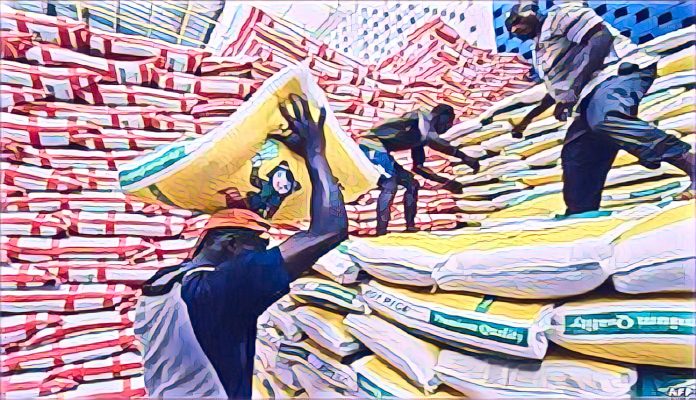
In 2023, Nigeria experienced a significant increase in food import costs, reaching a staggering $2.13 billion as reported by the Central Bank of Nigeria (CBN). This surge is due to a combination of factors including flooding, escalating insecurity, and their impact on the nation’s agricultural productivity, leading to increased reliance on imported food.
Despite Nigeria’s abundant agricultural potential and its reputation as Africa’s ‘food basket,’ the country encountered a 34% rise in the price of imported food commodities between April 2023 and April 2024. This increase reflects not only local challenges but also the influence of global market dynamics affecting food prices, particularly in sub-Saharan Africa where most staple foods are imported.
The increase in import costs is concerning, especially considering the Nigerian government’s efforts to reduce food imports as a way to ease economic difficulties and achieve self-sufficiency in food production. This initiative is in line with the United Nations’ Sustainable Development Goal to end hunger by 2030. However, experts argue that recent data on food imports shows a deviation from this goal, with a significant increase compared to previous years.
An analysis of the 2023 monthly disbursements for food imports reveals fluctuating but consistently high spending throughout the year, with peaks in certain months. For example, in January, the highest disbursement was $245.7 million, indicating a sustained demand for imported food products despite government restrictions.
The National Bureau of Statistics (NBS) reported in its April 2024 food inflation report that the food inflation rate hit 40.53%, influenced by price surges in staples such as millet flour, garri, and various types of meat and oils. Despite a slight monthly decrease in food inflation in April 2024, the average annual rate of food inflation for the preceding twelve months was 32.74%, marking a significant increase from the previous year’s rate of 23.22%. This spike in food inflation underscores the ongoing challenges within Nigeria’s food sector, exacerbated by external and internal pressures.
Kabir Ibrahim, the National President of the All Farmers Association of Nigeria, emphasized that while Nigeria has reduced its dependency on imports for certain items, the nation has never been completely self-sufficient. He expressed concerns about the future, predicting that food import costs could escalate further due to persistent issues such as insecurity and flooding, which severely impact agricultural productivity and the purchasing power of farmers. “The challenges we face are likely to intensify, particularly between July and September, which is a critical period in our farming season,” Kabir noted.
Professor Yusuf Muda, the Managing Director of the Centre for the Promotion of Private Enterprise, emphasized the importance of having more accurate data to fully understand the extent of food imports in comparison to total food consumption in Nigeria. He stated, “It is crucial to understand what percentage of our total food consumption is imported as opposed to what is produced locally, in order to make informed decisions about food security and economic policy.”
The situation is further complicated by the diverse range of imported foods. Essential staple foods like wheat, which are necessary for producing bread, flour, and other products, still require significant imports due to inadequate local production capacities.

