

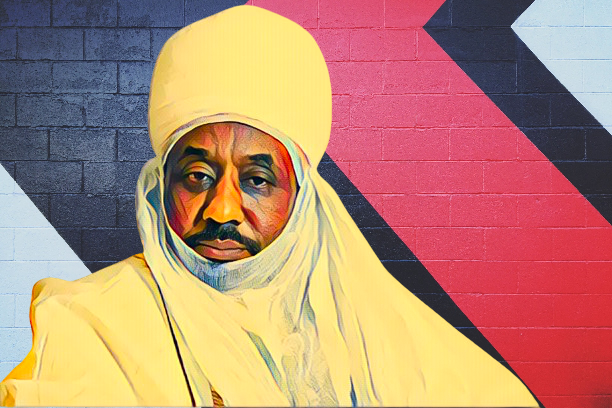
Four years after his deposition and banishment to Nasarawa State, Muhammad Lamido Sanusi has been reinstated as the Emir of Kano by the state governor, Abba Kabir Yusuf. This reinstatement follows the signing of the Kano State Emirate Council (Repeal) Bill 2024, which was passed by the State House of Assembly. The new law also abolishes the five emirates established by the former governor, Dr. Abdullahi Umar Ganduje.
The repeal of the emirate council law has resulted in the removal of the 15th Emir of Kano, Aminu Ado Bayero, and four other emirs: Emir of Bichi Nasir Ado Bayero, Emir of Rano Kabiru Muhammad Inuwa, Emir of Karaye Ibrahim Abubakar II, and Emir of Gaya Aliyu Ibrahim Abdulkadir. This decision has sparked tension and uncertainty in Kano and its surrounding areas.
Reports indicate mixed reactions among the deposed emirs and their supporters. While some remain unfazed, others, such as Aminu Ado Bayero, reportedly vacated the palace shortly after the bill’s passage. Governor Yusuf issued a 48-hour ultimatum for the former emirs to vacate their palaces and hand over all emirate properties to the office of the Deputy Governor.
Governor Yusuf signed the bill into law in the presence of key government officials, stating that the new law would foster unity and socio-economic development in Kano. He emphasized that reinstating Sanusi would bring peace and prosperity, fulfilling his campaign promise to restore the state’s cultural heritage and the legacy of the Kano emirate.
In a statement by the Governor’s Spokesperson, Mr. Sanusi Bature Dawakin Tofa, Yusuf declared, “Today, we re-appointed Sanusi Lamido Aminu Sanusi, popularly known as Muhammadu Sanusi II, as the 16th Emir of Kano while the five former emirs are expected to vacate the palaces within 48 hours.”
Sanusi, a former Governor of the Central Bank of Nigeria (CBN), was deposed in March 2020 by the Ganduje administration, which accused him of disrespecting institutions and the governor’s office. Sanusi’s removal was ostensibly to protect the sanctity and prestige of the Kano emirate.
Sanusi was delivering a keynote address at an Economic Summit in Port Harcourt when the repeal bill was passed. He swiftly left for Kano, amid tight security, to assume his reinstated position. It is anticipated that he will lead the Jumat prayers at Kano Central Mosque today.
The Deputy Speaker of the House, Muhammad Bello Butu, explained that the dissolution of the five emirates aimed to revive Kano’s lost glory. The Majority Leader, Lawan Hussaini Dala, noted that the previous division of the emirate distorted cultural heritage and the new amendment seeks to restore traditional prestige.
The reinstatement of Sanusi is seen as a fulfillment of the campaign promises by Rabiu Kwankwaso, the national leader of the New Nigerian Peoples Party (NNPP), and Governor Yusuf. Kwankwaso had pledged to review the law that removed Sanusi and return him to the throne.
The Northern Elders Forum (NEF) expressed concerns over the recent developments in Kano. Abdul-Azeez Suleiman, NEF’s Director of Publicity and Advocacy, urged caution in handling this sensitive issue to prevent further escalation of tensions.
Former Governor Ganduje, now the National Chairman of the All Progressives Congress (APC), has maintained silence on the matter. He canceled his trip to Kano, where he was to condole with the families of victims of the Kano Mosque blast, possibly due to the developments.
Saidu Bello, a Kano-based chieftain of the Peoples Democratic Party (PDP), criticized Governor Yusuf for not adhering to an agreement with local elites not to alter the emirate council. He warned that the repeal could lead to disaffection within the state.
Ado Ibrahim, a Kano-based author, supported Sanusi’s reinstatement as correcting the previous administration’s mistakes but cautioned against interpreting the action as politically motivated. Conversely, Professor Kamilu Sani Fagge from Bayero University, Kano, viewed the repeal as an act of vendetta, suggesting that political differences are undermining the traditional institution.
Fagge emphasized that the struggle for the throne should focus on preserving the institution rather than individual personalities. He urged stakeholders to work towards resolving the crisis to maintain the dignity and stability of the emirate.
The reinstatement of Sanusi as the Emir of Kano and the abolition of the five emirates have introduced a new chapter of uncertainty and tension in the state. As political and traditional dynamics continue to evolve, the focus must remain on preserving the cultural heritage and ensuring stability for the people of Kano.

