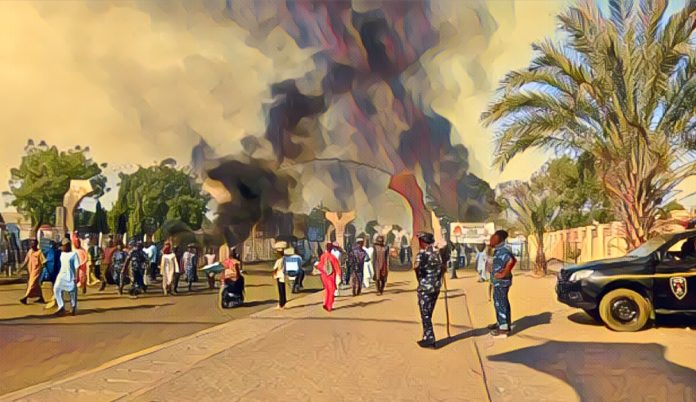
Kano, Nigeria – Protests have erupted in Kano following the reinstatement of Muhammad Sanusi II as Emir of Kano. The controversial decision has sparked widespread unrest, with demonstrators taking to the streets to express their opposition.
The reinstatement, announced by the state government, has been met with mixed reactions. Supporters of Sanusi, who was deposed in 2020, see his return as a victory for justice and a restoration of rightful leadership. However, many residents and political groups oppose the move, arguing that it undermines the legal and political processes that led to his removal.
“Reinstating Sanusi is a slap in the face of our democratic principles,” said protest leader Ahmed Musa. “This decision disregards the will of the people and the rule of law.”
The protests have disrupted daily life in Kano, with reports of road blockades, clashes between demonstrators and security forces, and damage to public property. Authorities have deployed additional security personnel to maintain order and protect key installations.
Sanusi, a former governor of the Central Bank of Nigeria, was removed from his position as Emir in 2020 by Governor Abdullahi Ganduje, citing insubordination and other administrative issues. His removal was widely viewed as politically motivated, given Sanusi’s outspoken criticism of government policies and corruption.
Sanusi’s reinstatement has revived old tensions and brought new challenges to the state government. “This situation requires careful handling to avoid further escalation,” said political analyst Jibrin Ibrahim. “The authorities must engage with all stakeholders to find a peaceful resolution.”
Governor Ganduje has called for calm and urged protesters to respect the law. “We understand the concerns of the people, but we must address this matter through dialogue and legal channels,” he said in a statement.
As the situation develops, many are looking to traditional leaders and community elders to mediate and help restore peace. There is a widespread hope that a resolution can be reached that respects both the legal framework and the cultural heritage of Kano.
The unrest in Kano highlights the deep-seated issues surrounding traditional leadership and political influence in Nigeria. It underscores the need for transparent and accountable governance to foster stability and public trust.
Source: Business Day