

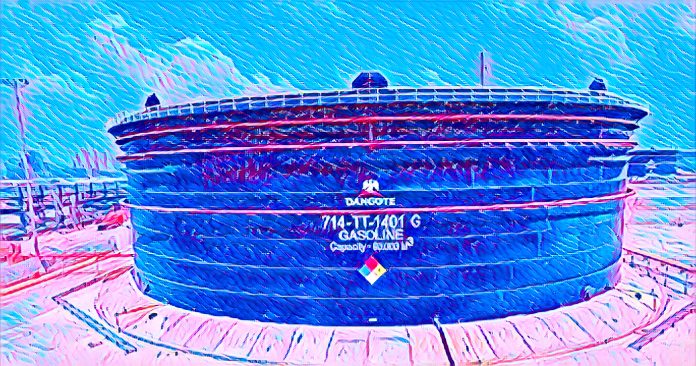
Devakumar Edwin, Vice President of Oil and Gas at Dangote Industries Limited (DIL), has accused International Oil Companies (IOCs) operating in Nigeria of deliberately sabotaging the Dangote Oil Refinery and Petrochemicals project. Edwin alleges that these companies are creating obstacles that threaten the refinery’s viability by manipulating crude oil prices and limiting access to local crude, forcing the refinery to incur additional costs through imports.
During a one-day training program for Energy Editors, organized by the Dangote Group, Edwin voiced his frustrations with the current market dynamics, which he believes are orchestrated to ensure the failure of the Dangote Refinery. He claimed that the IOCs are not only demanding unreasonable premiums well above market prices but at times outright deny the availability of crude oil. This situation has compelled the refinery to purchase crude oil from distant markets like the United States, significantly inflating its operational costs.
The ongoing struggle between the Dangote Refinery and the IOCs highlights deeper issues within Nigeria’s oil and gas industry, particularly regarding the adherence to Domestic Crude Oil Supply Obligations (DCSO) as stipulated by the Petroleum Industry Act (PIA). Edwin pointed out that despite efforts by the Nigerian Upstream Petroleum Regulatory Commission (NUPRC) to facilitate crude allocation, the IOCs seem intent on seeing the refinery fail.
Adding to the refinery’s challenges, Edwin criticized the Nigerian Midstream and Downstream Petroleum Regulatory Authority (NMDPRA) for its lax approach in issuing import licenses. According to him, the authority continues to allow the importation of low-quality diesel and jet fuel, which not only competes with the refinery’s output but also poses serious health risks to the Nigerian populace. He highlighted that these imported fuels often contain dangerously high levels of sulfur and other carcinogenic substances.
Edwin’s concerns are echoed in the actions of some European countries that have recently moved to ban the export of toxic fuels to West Africa. Belgium and the Netherlands, in particular, have set new standards to stop the export of high-sulfur diesel and petrol, aligning their regulations with the European Union’s quality requirements. These measures were prompted by findings that revealed fuels exported from these countries contained sulfur and benzene levels significantly above what is permitted in Europe, posing severe health risks.
The decision by the NMDPRA to continue granting import licenses for these substandard products is seen as a direct contradiction to Nigeria’s capacity to refine and supply cleaner fuels domestically. Edwin noted that despite Dangote Refinery’s ability to produce and supply diesel that complies with ECOWAS regulations, the market is being flooded with inferior products from Russia, exacerbated by global shifts in trade following the imposition of a Price Cap Scheme on Russian petroleum products by the US, EU, and UK.
As the refinery has begun exporting its cleaner diesel and aviation fuel to Europe and other global markets, Edwin expressed a need for more robust governmental action to protect the local industry and ensure the health of Nigerians. He urged the Federal Government and the National Assembly to take swift action to implement the PIA fully and protect national interests against what he describes as exploitative practices by the IOCs and inadequacies in regulatory enforcement.

