

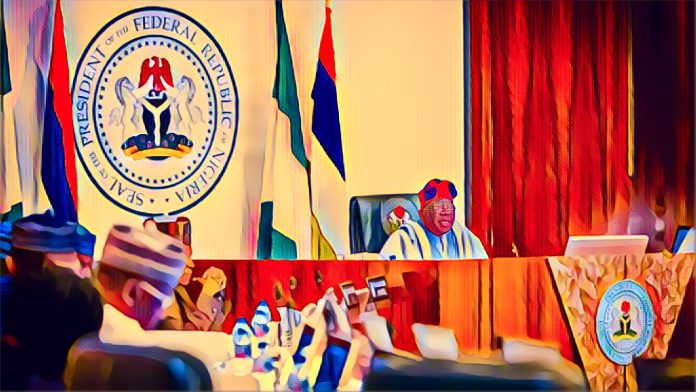
President Bola Tinubu held separate meetings with governors and a select group of traditional rulers to discuss the planned #EndBadGovernance protest scheduled for August 1. These engagements are part of his ongoing efforts to mobilize support and prevent the protests from taking place.
The president’s meetings with the governors led to the postponement of the regular National Economic Council (NEC) meeting. The governors, elected on the platform of the All Progressives Congress (APC), arrived at the Presidential Villa in Abuja and were immediately ushered into the president’s office for a closed-door session. This meeting was followed by another with traditional rulers.
The primary goal of these meetings was to put in place measures to prevent the planned August 1 to 10 protests against the current administration. Since the announcement of the protest, the government has been actively working to address the concerns of the organizers and their supporters. The president urged those planning the protests to reconsider and wait for the government’s response to their grievances.
Hope Uzodimma, speaking after the meeting, emphasized the need for dialogue. He invited the protest organizers to sit down with the government to discuss their issues and find solutions. “We don’t know what they are protesting for,” Uzodimma said. “We invite all of them to sit down with us in a room so we can discuss and agree on the issues, what they are, and proffer solutions.”
Uzodimma reiterated the commitment of the APC governors to the unity of Nigeria. He emphasized their dedication to improving the lives of Nigerians, creating jobs, and bringing about prosperity. The Progressive Governors’ Forum (PGF) also called on the organizers to reconsider the planned protest. The forum highlighted the government’s willingness to engage in meaningful dialogue and address the protesters’ concerns.
As the president and his team work to prevent the protests, there is a focus on understanding and addressing the root causes of public discontent. The government’s strategy includes open dialogue and concrete actions to address grievances. This approach aims to foster a sense of unity and cooperation among Nigerians.

