

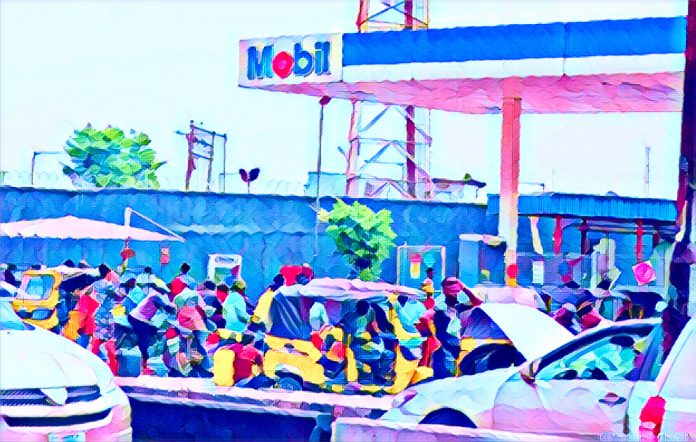
Despite reassurances from the Nigerian National Petroleum Company Limited (NNPC Limited), the petrol shortage crisis deepened yesterday, with more filling stations across the country closing their gates to motorists. The situation has caused significant distress among motorists and commuters, particularly in Lagos and Abuja, where long queues and high prices have become the norm.
Widespread Closures and Rising Prices
In Abuja’s Central Area, NNPC Retail stations continued to dispense fuel, but most stations operated by major and independent marketers remained shut. The pump prices have generally stayed the same, with NNPC selling at N617 per liter, Conoil at N660 per liter, and NIPCO at N695 per liter. However, some independent marketers have hiked their prices to between N800 and N940 per liter, and black marketers have increased theirs to between N1,100 and N1,200 per liter.
NNPC attributed the ongoing petrol scarcity in Lagos and the Federal Capital Territory (FCT) to a “hitch in the discharge operations of a couple of vessels.” The company stated it is working “round the clock with all stakeholders to resolve the situation and restore normalcy.”
Independent Marketers’ Struggle
Speaking to the press about the current petrol supply situation, Public Relations Officer of the Independent Petroleum Marketers Association of Nigeria (IPMAN), Chief Chinedu Ukadike, revealed that most tank farms in coastal areas were empty. He explained that the supply from NNPC Limited has not been stable, forcing independent marketers to source their products from third parties.
“Independent marketers don’t import petrol, so we rely on others. We’ve been told the problem lies with the vessel-to-vessel transfer. We’re ready to distribute petrol across our stations nationwide, but the situation should normalize this week based on our meetings,” Ukadike stated.
He added that independent marketers were selling petrol above N750 per liter because they had not received supplies directly from NNPC. “Our prices are higher because we source from the third tier. There are no queues at our stations because of the higher prices. However, at NNPC and major marketers’ stations, you will find queues due to cheaper rates,” he explained.
NNPC’s Efforts to Resolve the Crisis
NNPC has acknowledged the severity of the situation and is reportedly working tirelessly to address the petrol scarcity. The company’s spokesperson mentioned that they are collaborating with all relevant stakeholders to expedite the resolution of the issue and ensure a steady supply of petrol across the country.
The ongoing crisis has not only affected motorists but also had a ripple effect on various sectors of the economy. Public transportation has been hit hard, with commuters facing increased fares and longer wait times. Businesses that rely on fuel for operations are also experiencing challenges, leading to broader economic implications.
The petrol shortage crisis has highlighted the vulnerabilities in Nigeria’s fuel supply chain. It underscores the need for more robust infrastructure and better contingency planning to prevent future occurrences. The government’s response to the crisis will be crucial in restoring public confidence and ensuring the stability of the fuel supply.
Source: Vanguard

