

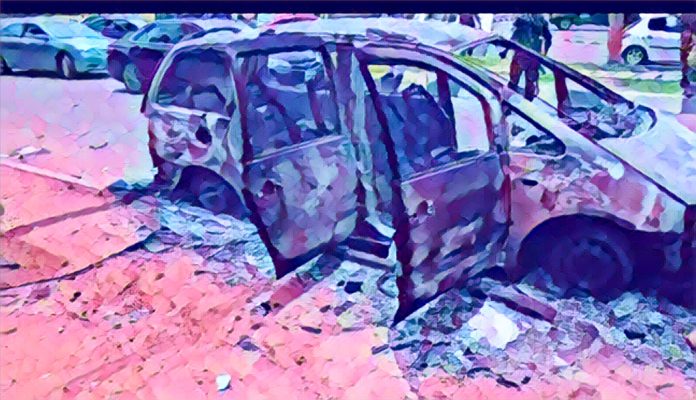
A peaceful procession in Abuja turned deadly when clashes broke out between members of the Islamic Movement in Nigeria (IMN), commonly known as Shi’ites, and the police. The violence occurred during the Arba’een symbolic trek, a religious walk marking the end of a 40-day mourning period for Imam Hussain, the grandson of Prophet Muhammad. The confrontation left several people dead, including both mourners and police officers, and many more injured.
The IMN has accused the Nigerian police of attacking the procession without provocation. According to a statement from the group, the police used force to disperse the participants, leading to multiple fatalities and injuries among the mourners. The group’s leader, Sheikh Ibraheem El-Zakzaky, and a senior member, Sheikh Sidi Sokoto, condemned the police actions and claimed that their march had been peaceful until the police intervened. The IMN insisted that they had taken precautions to prevent any disturbances by screening all participants before the trek began.
“We wish to inform the public that the police have attacked the ongoing Arba’een symbolic trek at Wuse District in Abuja and killed numerous mourners,” the IMN said in a statement. They further stated that the procession had been held peacefully in other areas, including Masaka and Zuba, the previous day without any incidents. The group reported that medical practitioners are currently attending to those critically injured and promised to provide more details about those who were killed, injured, or arrested.
However, the Nigerian police offered a different account of the events. In a statement released by Josephine Adeh, the spokesperson for the Federal Capital Territory (FCT) Police Command, the police accused the IMN of initiating the violence. According to Adeh, members of the Shi’ite group attacked police officers stationed at a checkpoint in Wuse with machetes, knives, and improvised explosive devices. The police claim that the attack was unprovoked and resulted in the deaths of two police officers, with three others critically injured and currently receiving treatment in the hospital. Additionally, three police patrol vehicles were reportedly set ablaze during the clash.
“The FCT Police Command wishes to confirm an unprovoked attack by the proscribed Islamic Movement of Nigeria, popularly known as the ‘Shi’ite’ group, on some personnel of the Nigeria Police Force,” the police statement read. It went on to describe how the IMN allegedly attacked the police checkpoint with weapons, including machetes and homemade bombs. Several members of the IMN were arrested following the incident, and the Commissioner of Police for the FCT, Benneth Igweh, condemned the attack on police officers. Igweh vowed to hold those responsible accountable for their actions, stating that the situation is now under control and that normalcy has been restored.
There has long been hostility between the IMN and Nigerian security forces, as evidenced by the recent violence in Abuja. Sheikh Ibraheem El-Zakzaky’s Islamic Movement of Nigeria (IMN) has a history of conflict with the Nigerian government, particularly during the 2015 military crackdown in Zaria, Kaduna State, which resulted in the deaths of hundreds of Shi’ites. The incident, which has continued to be a point of contention between the organization and the government, resulted in Sheikh El-Zakzaky and his wife Zeenat being hurt and taken into custody.
Witnesses in Abuja recounted chaotic events at the venue of the clash—the Wuse District. They claimed to have witnessed large police presences and Shi’ite organizations marching and singing religious slogans. As police tried to disperse the gathering, tensions quickly rose and physical confrontations resulted. It has been alleged that the police used tear gas and live bullets to subdue the crowd of people. Some IMN members allegedly used stones and homemade weapons as retaliation.
The immediate aftermath of the clash saw several casualties on both sides. Medical teams were deployed to the scene to provide first aid and transport the injured to nearby hospitals. The exact number of those killed remains unclear, but both sides have reported significant casualties. The IMN has accused the police of using excessive force, while the police maintain that they acted in self-defense after coming under attack.

