

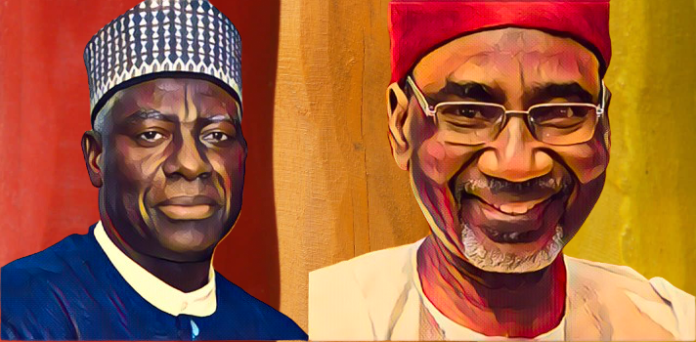
New details have surfaced regarding the recent removal of Ahmed Rufai, former Director-General of the National Intelligence Agency (NIA), and Yusuf Bichi, former Director-General of the Department of State Security Service (DSS). President Bola Tinubu replaced these top intelligence officials on Monday, appointing Mohamed Mohammed as the new Director-General of the NIA and Adeola Ajayi as the new Director-General of the DSS.
Sources within the Presidential Villa have revealed that Rufai and Bichi were dismissed due to the embarrassing seizures of Nigeria’s assets, including the seizure of presidential jets, by a Chinese firm called Zhongshan Fucheng Industrial Investment Co. Limited. Reports suggest that the intelligence agencies failed to gather adequate intelligence on these incidents, leading to their replacement.
It is also alleged that Yusuf Bichi, the former DSS chief, was dismissed partly due to acts of insubordination toward the Office of the National Security Adviser (NSA). His strained relationship with the NSA’s office reportedly contributed to breakdowns in communication and coordination within the country’s security apparatus. President Tinubu was reportedly frustrated with the quality of security reports reaching his office.
One source stated, “The seizure of Nigeria’s assets was an embarrassment to the president, and the DG of NIA took the easy way out when he realized he would be sacked.” It is suggested that Rufai may have resigned preemptively due to the growing dissatisfaction with his performance. Reports indicate that President Tinubu was displeased with how the security architecture was managed, particularly the failure to prevent critical information from escaping the notice of Nigeria’s intelligence agencies.
In announcing the appointments of the new security chiefs, President Tinubu expressed his expectations that the new leaders will work diligently to enhance the performance of the intelligence agencies. He urged Mohamed Mohammed and Adeola Ajayi to use their experience to address the country’s security challenges and emphasized the importance of enhanced collaboration with other security agencies and close coordination with the Office of the National Security Adviser (ONSA).
Reports from the Villa suggest that Rufai’s departure followed a formal query regarding the security lapses that allowed critical information about Nigeria’s assets to slip through the cracks. This incident has been particularly damaging, not just because of the immediate implications but also due to the broader perception of Nigeria’s vulnerability on the global stage.
After the removal of the two senior security officials, a video surfaced on social media showing what appeared to be celebrations at the DSS headquarters after the appointment of Adeola Ajayi as the new Director-General. The authenticity of this footage has been debated, with some claiming it is old footage, while others insist the celebrations were indeed held in Abuja.
Sources close to the DSS have expressed optimism about Ajayi’s appointment, describing it as the right choice for the role, given his extensive experience and proven track record within the DSS. Ajayi’s appointment was officially confirmed by Peter Afunanya, the Director of Public Relations and Strategic Communications at the DSS National Headquarters in Abuja. Ajayi, who joined the DSS in 1990 as a cadet officer, has received extensive training in management, security leadership, critical thinking, and human resources, both locally and internationally, and has held several key command positions.
Security experts, including Senator Iroegbu, have reacted positively to the leadership changes, commending President Tinubu for keeping the former chiefs in their roles for more than a year since taking office in May 2023. Iroegbu noted that maintaining these officials, appointed by the previous administration, demonstrates the president’s commitment to continuity and stability. He also pointed out that changes at the top levels of national security could have significant implications given the ongoing global power dynamics and regional instability in places like Niger, Mali, and Burkina Faso.
Iroegbu emphasized the need for Nigeria to be vigilant and not take any chances, especially considering the recent embarrassing episodes involving the seizure of national assets without prior knowledge. He referenced a similar situation involving the P&ID case in the UK, emphasizing the importance of proactive intelligence and security measures. The security expert urged the incoming heads of the security agencies to focus on critical issues such as transactional crimes, banditry, and insurgency, which continue to pose significant challenges to Nigeria.
He also criticized the previous leadership for not addressing the core issues of insecurity effectively. “A lot of killings, kidnappings, banditry, and armed robberies are still going on in the country. Those in the Presidency should be able to advise the President properly,” Iroegbu remarked. He stressed that addressing these challenges should take precedence over political manoeuvring or silencing opposition voices.
Furthermore, Iroegbu highlighted the need for better coordination among the various security agencies. He pointed out that the absence of synergy among these entities could lead to disastrous outcomes, as seen in the post-mortem analysis of the September 11, 2001, terrorist attacks in the United States. “So, we hope that they will transform the security architecture to weed out their differences and work as a team,” he added, emphasizing the importance of a united front in tackling Nigeria’s complex security challenges.

