

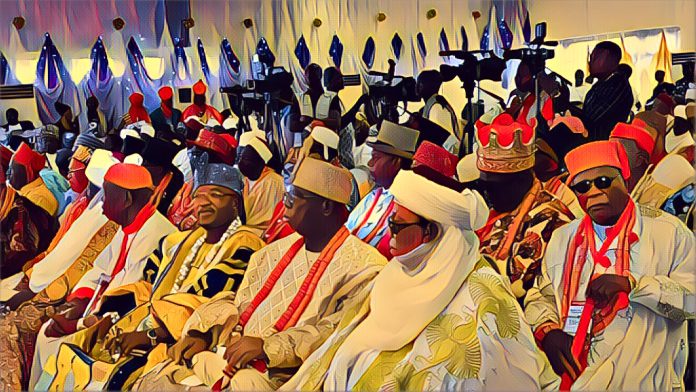
KEY POINTS
- Traditional leaders influence elections and public opinion.
- They mediate disputes and promote peace in communities.
- Their roles balance cultural heritage with modern governance.
Traditional leaders have been essential to Nigeria’s sociopolitical structure, acting as guardians of culture, arbiters in conflicts, and influencers in governance.
Their positions have transformed markedly, from pre-colonial leaders to modern agents balancing tradition and modernity.
Chronological development of traditional leadership
In pre-colonial Nigeria, figures such as Obas, Emirs, and Igwes wielded significant power over governance, justice, and cultural preservation.
The introduction of British colonial control implemented indirect governance, which transformed their functions by incorporating them into the colonial administration.
Traditional rulers served as middlemen between colonial authority and their populations, a structure that both boosted and constrained their influence.
According to profession nigeria , following independence, democratic governance was established, diminishing the nominal authority of old rulers.
The 1999 Constitution of Nigeria does not confer official political roles upon them; yet, their advising contributions are significant in governance, conflict settlement, and cultural preservation.
They persist in exercising informal power, frequently being sought for counsel on policies impacting their communities.
Modern political impact
Although without formal authority, traditional leaders exert considerable influence on politics in various manners.
They often influence governmental decisions at both local and national levels, leveraging their cultural acumen and understanding of community dynamics.
According to academia, their capacity to mediate disagreements renders them vital in conflict resolution, utilizing their esteemed roles to promote peace and reconciliation. Moreover, their endorsements in elections can affect popular sentiment and shape political results. These endorsements hold significant influence in rural regions, where they are seen as credible community representatives.
Nonetheless, their influence is accompanied by dispute. Critics contend that the participation of traditional leaders in politics may compromise democratic processes, especially when they are viewed as biased or when their authority eclipses that of elected politicians.
Obstacles and critiques
Traditional leadership encounters numerous criticisms and obstacles in contemporary Nigeria.
Democratic tensions emerge when their authority clashes with contemporary governance principles, especially when conventional norms hinder inclusivity and accountability.
Allegations of corruption have emerged, with certain traditional leaders accused of misappropriating communal resources or abusing their power for personal benefit, thereby undermining public faith.
Moreover, numerous conventional frameworks marginalize women and adolescents, reinforcing patriarchal standards that restrict varied representation in decision-making processes.
According to oxford research Traditional chiefs continue to be essential figures in Nigeria’s political and social spheres, reconciling their historical influence with modern concerns.
Their contributions to peacebuilding and community development emphasize their lasting significance. Addressing the accusations of partisanship, corruption, and exclusivity is crucial for their more successful integration into Nigeria’s democratic system.

