

KEY POINTS
- Erosion threatens homes, farms, and infrastructure in Southern Nigeria.
- Government-backed projects like NEWMAP are reclaiming gully erosion sites.
- Reforestation, sustainable farming, and check dams are key solutions.
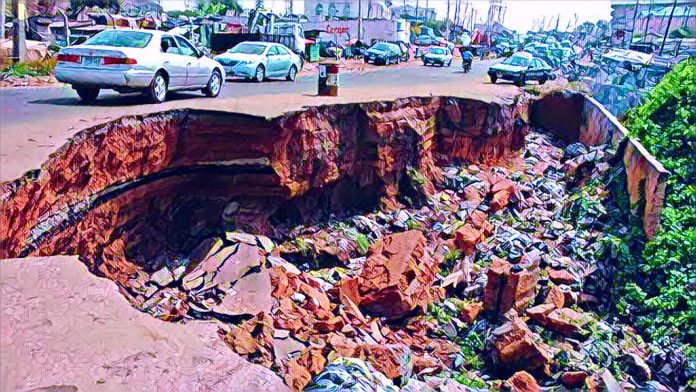
Erosion is no longer just a natural process in Southern Nigeria, it’s a full-blown crisis. The land degradation caused by water, wind, and human activities has put entire communities at risk, washing away homes, farmlands, and critical infrastructure.
Southern Nigeria, with its heavy rainfall and sandy soil, is particularly vulnerable to gully erosion, which forms large ravines that swallow up land, property, and livelihoods.
States like Anambra, Abia, Imo, and Edo are among the hardest hit, with residents in some areas forced to abandon their homes and farms.
The loss of arable land affects local food production and destabilizes rural economies, while damaged roads and bridges limit access to essential services.
The federal and state governments, along with international partners, are intensifying efforts to curb this crisis.
Through erosion control projects, they aim to protect affected communities, safeguard farmland, and preserve Nigeria’s natural resources. But how effective are these efforts, and what more needs to be done to combat erosion?
Collaborative erosion control projects bring hope to affected communities
Tackling erosion in Southern Nigeria requires a joint effort from government agencies, development partners, and local communities.
The Nigerian Erosion and Watershed Management Project (NEWMAP), funded by the World Bank, has been a key player in addressing this issue.
Since its inception, NEWMAP has launched erosion control projects in over 20 states, focusing on vulnerable areas where erosion has caused the most damage.
The initiative includes reforestation, gully reclamation, and community engagement to restore affected lands and build local capacity.
For example, in Anambra State, one of the worst-hit areas, NEWMAP’s intervention has stabilized soil in erosion-prone communities and prevented the loss of homes and infrastructure.
Large gully sites like those in Umudunu and Ekwulobia have been reclaimed, protecting roads, schools, and residential areas from destruction.
These projects are not just about land restoration. Local communities are trained in erosion prevention techniques, such as tree planting and sustainable farming practices.
By involving residents in the process, NEWMAP ensures that communities can continue to protect their land long after the projects end.
Nature-based solutions and reforestation lead the fight against erosion
To combat erosion in Southern Nigeria, authorities are turning to nature-based solutions.
Unlike traditional engineering approaches that rely on concrete structures, nature-based solutions use natural processes to restore and stabilize the environment.
Reforestation is one of the most effective strategies. Planting trees and other vegetation helps to bind the soil together, reducing its vulnerability to water runoff and erosion.
The roots of these plants act as a natural barrier, slowing down rainwater and preventing it from washing away topsoil.
The Nigerian government is also promoting sustainable farming practices that prioritize soil health.
Farmers are being trained to adopt agroforestry, cover cropping, and contour farming to reduce soil erosion on farmlands.
These methods not only protect the land but also boost crop yields, supporting food security in rural communities.
Beyond reforestation, some erosion control projects include the construction of check dams, terraces, and drainage systems to divert rainwater away from vulnerable areas.
These physical structures slow down water flow, reducing its erosive power and protecting key infrastructure like roads, bridges, and farmland.
The future of erosion control in Southern Nigeria
While progress has been made, erosion in Southern Nigeria remains a complex problem. Climate change has intensified rainfall patterns, increasing the risk of erosion-related disasters.
The government must continue to invest in sustainable solutions to protect communities and prevent further land degradation.
More funding is needed for large-scale reforestation and water management. Experts have called for stronger policy frameworks to ensure that erosion control efforts are sustainable in the long term.
Equally important is community participation. When local people are actively involved in these projects, they are more likely to maintain the structures, trees, and farming practices that prevent erosion.
With continued support from stakeholders, including the Nigerian government, international organizations, and local communities, there is hope that erosion control in Southern Nigeria will shift from crisis management to long-term sustainability.

