

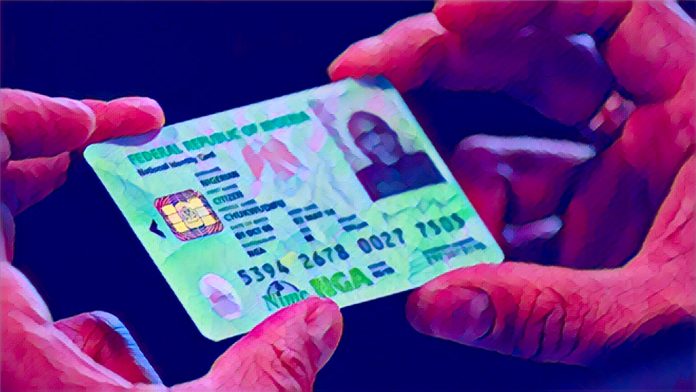
KEY POINTS
- New NIN card improves access to government services and financial inclusion.
- Biometric-enabled card prevents fraud and supports unbanked rural citizens.
- Collaboration with stakeholders ensures transparency and drives economic growth.
The Nigerian government is introducing a new National Identification Number (NIN) card designed to enhance access to government services, particularly for vulnerable citizens.
Speaking at a press briefing in Abuja, Dr. Peter Iwegbu, Director of Card Management Services at the National Identity Management Commission (NIMC), highlighted the card’s potential to streamline government-to-people services, improve financial inclusion, and provide a secure platform for accessing interventions.
According to Dr. Iwegbu, the new card system addresses the longstanding issue of beneficiary identification by integrating each person’s NIN for verification purposes.
Moreover, the innovation seeks to prevent fraud attacks by delivering government benefits to those who deserve them.
Multifunctional features enhance accessibility
The NIN card is a versatile tool, functioning as an identification card, a means to access government services, and a platform for financial transactions.
The system provides biometric data protection which stops unauthorized beneficiaries from exploiting government programs.
According to NIMC, the card will support various initiatives, including agricultural loans for farmers and student access to government loans.
The card is also designed to serve unbanked citizens in rural areas, enabling them to perform transactions offline and online.
The Director-General of NIMC, Abisoye Coker-Odusote, explained that the card aligns with President Bola Tinubu’s eight-point agenda.
Through the new platform, Nigerians gain direct access to government assistance without requiring middlemen to connect them to their benefits and services.
Collaboration to boost financial inclusion
In collaboration with stakeholders such as the Nigeria Interbank Settlement Systems, AfriGO, and Data Mining Company, the NIMC plans to roll out digital cards equipped with multiple wallets.
According to Punch, these cards aim to drive financial inclusion, enhance economic transparency, and support Nigeria’s cashless policy by keeping transactions within the domestic economy.
AfriGO’s Managing Director, Ebehijie Momoh, described the card as a “groundbreaking domestic solution” critical for Nigeria’s economic growth.
Data sovereignty laws, along with decreased foreign system dependency, support Nigeria in reaching its socio-economic targets through this card.
The card will officially launch next week and is expected to transform how Nigerians interact with government services, from paying utility bills to accessing transportation and shopping.

