

KEY POINTS
- Limited financing restricts Nigerian farmers’ productivity.
- Poor infrastructure isolates farming communities.
- Climate change threatens agricultural stability in Nigeria.
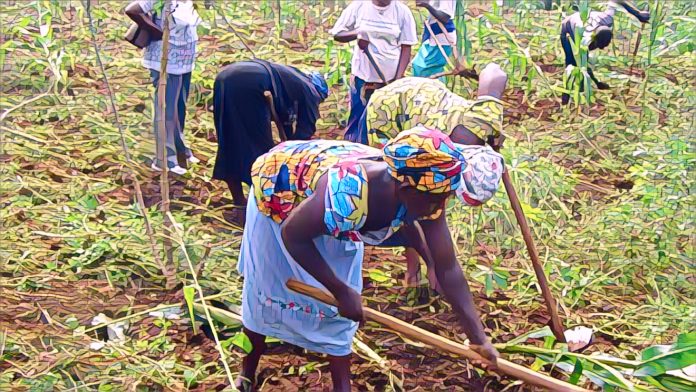
Rural farmers face numerous challenges that hinder their productivity and livelihoods, despite Nigeria’s rich agricultural heritage.
These struggles, often overshadowed by urban narratives, are pivotal to understanding the broader socio-economic fabric of the nation.
Limited access to financing hampers growth
One of the primary hurdles for rural farmers is the lack of access to adequate financing.
Small-scale farmers who lack enough capital encounter significant barriers in buying modern agricultural tools, superior seeds and vital farming equipment.
This financial constraint limits their productivity and keeps them trapped in subsistence farming.
Rural farms are unable to dream about expanding production or enhancing yield levels due to inadequate support.
Inadequate infrastructure isolates communities
A major obstacle in agriculture stems from inadequate framework of built systems. Many of the farming areas throughout the country operate without adequate infrastructure including dependable roadways, electric power systems and storage capacity.
The limited access to outside markets and poor storage facilities results in major crop waste for small farmers.
Proper storage facilities are essential because crops spoil rapidly which causes both financial losses and wasted food.
Climate change threatens agricultural stability
The agricultural sector in Nigeria experiences a rising threat from environmental change.
Soil crop cultivation methods have become unreliable because of irregular rains, extended dry seasons and escalating temperatures.
The modifications to the environment produce lower yields of crops and raise the risk of food shortages.
Present-day farmers depend on reliable weather but they now confront unpredictable conditions that endanger their ability to make a living from farming.
Insecurity disrupts farming activities
In recent years, rising insecurity has severely impacted rural farming communities.
The targeting activities of armed groups and bandits cause people to lose their lives alongside massive population displacements and mass abandonment of farmlands.
In January 2025, suspected militants murdered at least 40 farmers within Borno state, thus illustrating the severe risks farmers experience when attending to their lands.
Knowledge gaps hinder modern agricultural practices
Rural farmers struggle to obtain the latest agricultural information which would aid them in practicing best modern farming techniques.
The lack of basic knowledge stops farmers from using modern agricultural practices that could boost their production levels.
When extension services fail to reach farmers, they stick to outdated agricultural practices even though these methods become ineffective under changing environmental conditions.
Market access challenges limit profitability
The challenge of accessing profitable markets becomes challenging even though farmers succeed in producing abundant yields.
Farmers must accept low prices from middlemen because inadequate transportation systems and absent market data make it impossible for them to find better sales opportunities.
This exploitation reduces their income and discourages increased production.
Farmer compensation cannot reach appropriate levels if they lack direct market contacts.
A comprehensive solution to these problems combines better infrastructure development with financing availability, enhanced security systems and well-developed agricultural extension programs.
The awareness of undisclosed hardships allows people to fully grasp the strength of rural Nigerian farmers, while understanding their fundamental position in food preservation.

