

Key Points
-
Plateau and Benue states suffer horrific killings and violence.
-
Government promises to address the crisis have yielded little result.
-
Boko Haram’s resurgence in Borno signals worsening security threats.
Benue and Plateau states have endured horrific violence this month, with over 100 people killed in Plateau alone.
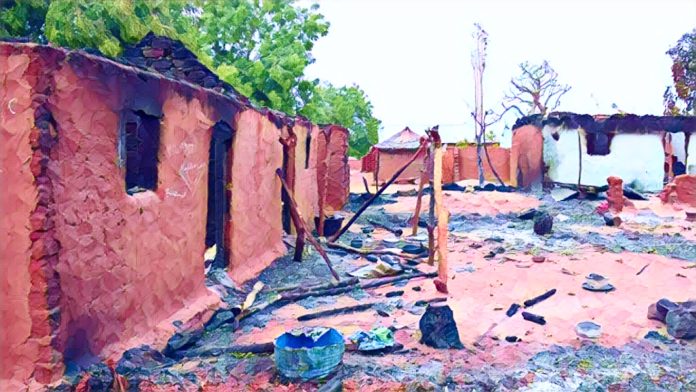
Gunmen, often on motorcycles and armed with assault rifles, have terrorized local communities, burning houses and displacing thousands.
The violence, which includes the slaughter of innocent civilians and the destruction of homes, has reached alarming levels, raising concerns about the effectiveness of Nigeria’s security forces.
In mid-April, gunmen attacked five communities in Plateau’s Bokkos Local Government Area. The attackers killed 52 people and displaced 1,800, leaving homes in ruins.
Despite public outcry and promises from national leaders, including President Bola Tinubu and National Security Adviser Nuhu Ribadu, the violence continued.
Security officials visited the area, but less than 10 days later, another brutal attack occurred in Bassa Local Government Area, resulting in 56 deaths.
Governor Caleb Muftwang described the events as genocidal and claimed that some of the attacks were orchestrated by external forces.
Government responses show deepening challenges
Though government officials have pledged to address the underlying causes of the violence, their responses have been inadequate.
Several past investigations, such as those conducted in 1994, 2001, and 2008, failed to produce any lasting solutions.
Reports from various panels remain ignored, and violence continues to rage across these regions.
The government has deployed military forces to the affected areas, including the Operation Safe Haven task force and the Nigerian Army’s 3rd Armoured Division.
However, security forces’ repeated failures to prevent such attacks suggest a deeper issue with intelligence gathering and operational readiness.
As local officials and citizens demand action, it is evident that President Tinubu must take stronger, more decisive steps to address the crisis and ensure public safety.
Boko Haram resurgence threatens security across regions
In addition to the violence in Plateau and Benue, Boko Haram’s resurgence in Borno state has also raised serious concerns.
Governor Babagana Zulum expressed alarm over terrorist attacks on military formations in towns like Wajirko, Damboa, and Gamboru Ngala.
The attacks have led to significant military casualties, including the deaths of 12 soldiers in Wulgo.
This resurgence highlights the ongoing threat posed by terrorist groups, even as Nigerian forces make gains in combating insurgency.
Reports of daily Boko Haram attacks and kidnappings signal a failure to confront these militants effectively.
Zulum has called for renewed efforts to prevent the escalation of violence, warning that the state is losing ground in its battle against terrorism.
As the country enters the farming season, these attacks threaten not only security but also food production, further complicating Nigeria’s challenges.

