

KEY POINTS
-
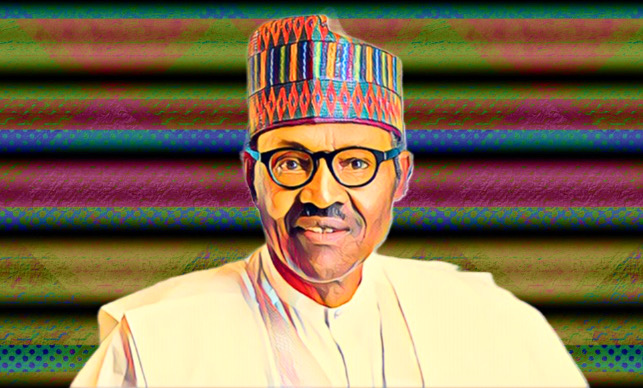
Former President Buhari died at 82 in a London hospital and will be buried in Daura.
-
Tributes praise his integrity, while critics cite economic hardship and disunity under his rule.
-
Nigeria begins three days of national mourning as dignitaries gather for his funeral.
The death of Nigeria’s former President Muhammadu Buhari at the age of 82 has stirred a complex wave of reflection across the nation he once ruled.
The retired general, who passed away on Sunday, July 14, 2025, in a London hospital, will be laid to rest in his hometown of Daura, Katsina State.
His remains arrived in Nigeria on Monday morning aboard a presidential aircraft that touched down at the Nnamdi Azikiwe International Airport, Abuja, before proceeding to Daura for burial in accordance with Islamic rites.
President Bola Tinubu declared three days of national mourning, ordering flags to fly at half-mast and public offices to observe moments of silence.
A high-powered delegation led by Vice President Kashim Shettima and Chief of Staff Femi Gbajabiamila welcomed the late president’s remains. Former heads of state, traditional rulers, and foreign dignitaries are expected to attend the funeral ceremonies in Daura.
Born on December 17, 1942, in Daura, Buhari rose through the ranks of the Nigerian military, culminating in his appointment as the nation’s military head of state following a coup in December 1983.
His regime was marked by a stern anti-corruption campaign and a controversial crackdown on civil liberties, elements that would continue to define his later civilian presidency.
Buhari: A nation divided over a disciplined legacy
To many Nigerians, Buhari represented integrity, restraint, and a return to national values. His 2015 democratic election, after three failed attempts, was seen as a sign that Nigeria’s democracy had matured. He defeated incumbent Goodluck Jonathan, becoming the first opposition candidate to unseat a sitting Nigerian president. “He brought back a sense of accountability in government,” said Yusuf Maitama, a political science lecturer at Ahmadu Bello University. “People might not have liked his style, but they respected his intent.”
Yet, his presidency was also riddled with criticism. From the handling of the economy to the management of insecurity in the North-East and allegations of ethnic favoritism, Buhari’s legacy remains hotly debated.
Critics point to rising inflation, a weakened naira, and persistent kidnapping and terrorism as areas where his leadership faltered. “He failed to unite the country. His appointments tilted heavily northward, creating distrust in the South,” argued Nnenna Okoye, a Lagos-based civil rights activist.
Internationally, Buhari was regarded as a stable leader in an unstable region. During his tenure, Nigeria joined global climate accords, fought regional terrorism through the Multinational Joint Task Force, and mediated West African diplomatic disputes. Nonetheless, his travel for medical treatment abroad — often to the United Kingdom — drew criticism and underscored the poor state of Nigeria’s healthcare system.
As citizens from various walks of life mourn, reactions continue to pour in. The Sultan of Sokoto, Alhaji Sa’ad Abubakar III, described Buhari as “a soldier who lived and died for Nigeria,” while former President Olusegun Obasanjo said he “respected Buhari’s stoicism, even when we disagreed sharply.”
In Daura, preparations for the burial were already underway Monday afternoon. Security has been tightened, and roads leading to the late president’s compound have been sealed off. Prayers and tributes echoed through the town’s mosques, even as residents gathered quietly outside his family home.
Buhari is survived by his wife, Aisha, and several children. His tenure may be over, but the debates over his legacy are unlikely to end soon. Whether viewed as a national hero or a missed opportunity, Buhari’s imprint on Nigeria is indelible.

