

KEY POINTS
- Nigeria’s $60 billion bullet train project is near full government approval.
- The first 1,600km phase could start partial operations in three years.
- Analysts expect major economic and environmental benefits nationwide.
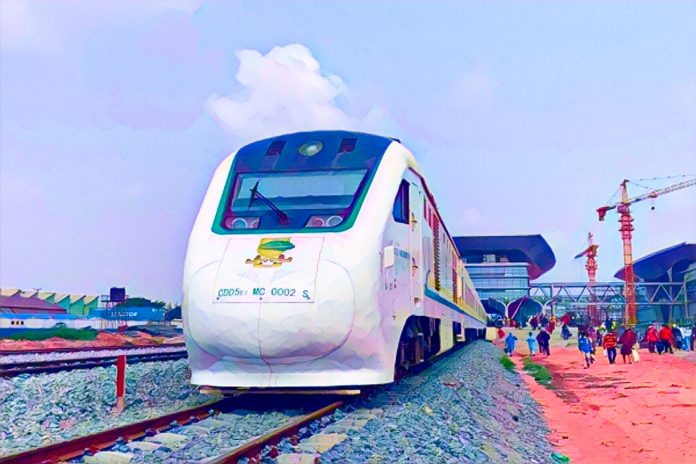
Nigeria’s long-envisioned bullet train network—one of the country’s most ambitious infrastructure dreams—may finally leave the drawing board.
Backed by $60 billion in Chinese funding and nearly all required government approvals, the high-speed rail project promises to transform travel across Lagos, Abuja, Kano, and Port Harcourt, potentially redrawing the country’s economic map.
Bullet train project clears major hurdles
At a press briefing in Abuja, De-Sadal Nigeria Limited, its Chinese partner China Liancai Petroleum Investment Holdings, and government officials announced that construction on the 4,000-kilometre high-speed network would soon begin.
Samuel Uko, chief executive of De-Sadal, said $55 billion for the first phase—spanning 1,600 kilometres—has already been secured from the Asian Development Investment Bank.
The project’s first stage, linking major cities, could see partial operations within three years, with Lagos-to-Lokoja passengers possibly boarding earlier.
Transportation Minister Sa’idu Alkali confirmed the Infrastructure Concession Regulatory Commission (ICRC) has approved the outline business case, with a full business case pending Federal Executive Council clearance.
Bullet train to reshape economy and mobility
Government ministers have pledged to support the venture, with Petroleum Resources (Gas) Minister Ekperikpe Ekpo assuring fuel supply for operations. Beyond speed, officials and analysts point to a wave of expected benefits—rising property values, a tourism lift, reduced traffic congestion, and a GDP boost along the rail corridor.
Economic experts compare the project’s potential to Japan’s Shinkansen network, which has carried over 10 billion passengers since 1964 and became a benchmark for efficiency.
According to Business Day, Analyst Allwell Izu predicts job creation, environmental gains through lower carbon emissions, and even population shifts, as improved connectivity could allow workers to live farther from major cities.

