

Key Points
-
Oyo Empire resisted Britain’s invasion under Alaafin Adeyemi I.
-
The defiance shaped Yoruba nationalism and cultural identity.
-
Historians link Oyo’s stand to Nigeria’s early anti-colonial thought.
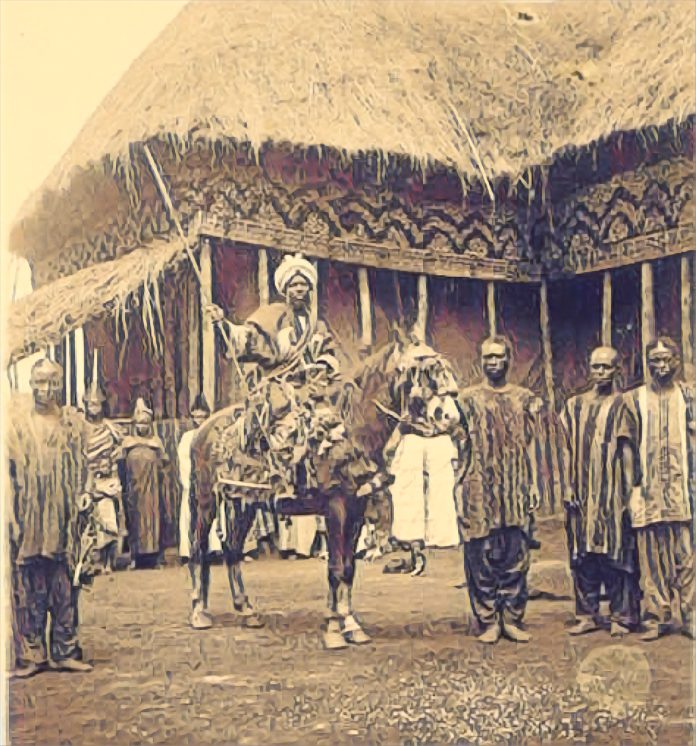
British troops moved into Oyo in 1895, expecting another quick campaign. Instead, they found an empire that was determined to protect its independence and culture. This empire would become a lasting symbol of resistance in Nigeria’s colonial history.
The Oyo Empire, which was ruled by Alaafin Adeyemi I (Oba Adeyemi Atiba’s son), was still a strong Yoruba kingdom at the time. It was weakened by fighting among its own people and the fall of Old Oyo, but it still had a lot of power in southwestern Nigeria.
The Royal Niger Company and Sir George Taubman Goldie supported Britain’s expansionist drive, which aimed to extend imperial trade control deep into Yoruba territories.
The Oyo Empire fought back against British rule
The crisis started when the Alaafin refused to sign a British trade and protectorate treaty that would have given up Oyo’s independence. With the help of strong chiefs and the Are Ona Kakanfo (Field Marshal), the Alaafin gathered local warriors and town alliances for one last fight.
The Oyo Traditional Council has oral records that say the British didn’t understand how well the Yoruba defended themselves by using guerrilla-style ambushes and fortified compounds.
British forces were said to have suffered heavy losses before taking control of Oyo after several months of fighting, even though they had more firepower. The fall started the full integration of the region into the colonies, but it also sparked a wave of political awareness that shaped future nationalist movements.
The legacy of the Alaafin’s defiance persists
Historians, such as Professor Toyin Falola from the University of Texas and Dr. Tunde Olatunji, contend that the Oyo resistance represented a more extensive repudiation of imperial domination. Falola says that “the Alaafin’s refusal to submit laid the philosophical groundwork for Yoruba self-determination.”
The Oranyan Festival, which takes place every year, is one way that people remember that defiance. The Alaafin’s palace is now a cultural landmark and a symbol of Yoruba strength.
The resistance of the Oyo Empire is still a national example
Nigeria’s view of colonial history is still shaped by the Oyo Empire’s position. Cultural scholars and traditional leaders use it as proof that resistance was based on more than just politics; it was also based on who people were.
More than a hundred years later, Oyo’s defiance is still a source of pride. It is a story of independence, bravery, and the desire to stay strong.

