

KEY POINTS
- Air Peace secures Nigeria’s first dry lease in years.
- Government backs move to strengthen aviation sector.
- Dry leasing boosts Nigeria’s air service agreements.
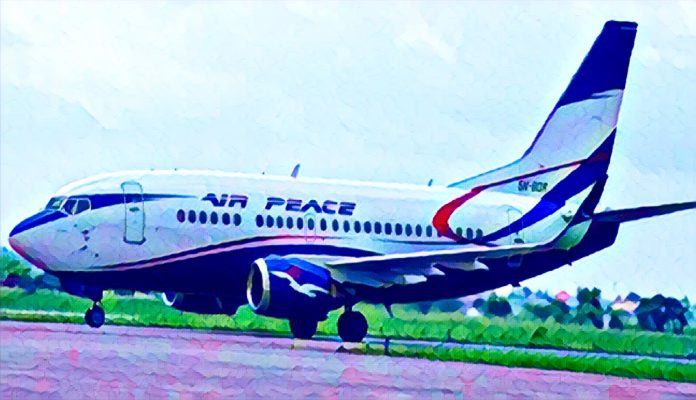
Nigeria’s largest airline, Air Peace, has taken delivery of a Boeing 737-NG on a dry lease from Irish-American leasing giant AerCap, the country’s first such deal in nearly a decade.
At the arrival ceremony in Lagos, AerCap’s Vice President of Leasing, Gad Wavomba, confirmed that this marked a turning point for the Nigerian aviation sector, which had not completed a dry-lease transaction in almost ten years.
Air Peace dry lease revives industry confidence
A dry lease means the lessor provides only the aircraft, while the lessee handles operations, maintenance, insurance, and crew. The model, though common globally, has been rare in Nigeria due to regulatory and financial constraints.
Minister of Aviation and Aerospace Development, Festus Keyamo, said the milestone was a collective government effort, signaling restored trust in Nigeria’s aviation system. He urged more leasing partnerships, especially for wide-body aircraft, to help local airlines utilize bilateral air service agreements (BASAs) with other nations.
“The confidence of the world in our jurisdiction is being restored,” Keyamo said. “We can be honest, straightforward, and trustworthy. Now, we must take advantage of our reciprocal rights under international air service agreements.”
Air Peace dry lease signals growth for Nigerian airlines
Air Peace Chairman Allen Onyema praised the administration’s support, noting that major global carriers thrive through leasing rather than outright aircraft purchases.
“In Nigeria, airlines are expected to buy planes outright. This is changing,” Onyema said. “Today, Air Peace represents all Nigerian airlines, carrying the vision and aspirations of the nation.”
Onyema credited Keyamo’s leadership for transforming the sector, enabling local airlines to compete fairly. “Before now, foreign carriers dominated the market. But this administration has empowered Nigerian airlines to take their place globally,” he added.
Boeing’s Sales Director for Africa, Moore Ibekwe Jr., echoed the sentiment, calling the lease a major stride for Nigeria. “It took commitment and vision from the minister’s office,” he said. “This dry lease shows Nigeria’s readiness to reclaim its position in Africa’s aviation map.”

