

Key Points
- Lawmakers warned that Nigeria faces over 24,000 violent incidents annually, including kidnappings and terrorist attacks.
- Parliament called for stronger legislation, decentralized policing, and a National Border Force to tackle insecurity.
- Leaders demanded accountability from security agencies and urged urgent reforms to protect citizens and communities.
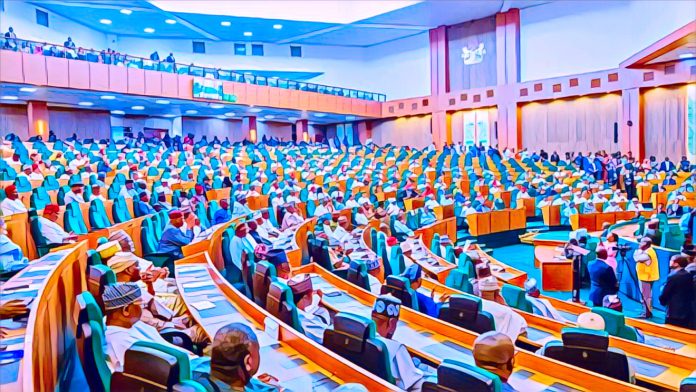
The House of Representatives held a special plenary session Tuesday to address Nigeria’s escalating insecurity, with lawmakers issuing some of the sharpest self-critical statements in recent years.
Members warned the country was “slipping” and that institutions were failing, stressing that parliament must take responsibility to help restore order.
Minority Leader Kingsley Chinda said insecurity could not be tackled without unity and transparency.
“Nigerians travel with fear, pray until their relatives arrive, and live in a country where government has failed in its primary duty,” he said.
Chinda identified political violence, porous borders, economic displacement, and extremist ideology as key drivers of insecurity.
He accused politicians of exploiting unprotected borders for political gain and called for the creation of a National Border Force backed by technology, as well as state or community policing.
He also urged a closed-door session with security chiefs to convey public concerns.
Deputy Speaker Calls for Legislative Solutions
Deputy Speaker Benjamin Kalu said the security breakdown required legislative reforms rather than purely military responses.
He cited weak institutional enforcement, underfunding, and misalignment between policy and execution as critical obstacles.
Kalu outlined a five-point framework for action, including situational analysis, addressing institutional weaknesses, closing legislative gaps, implementing priority reforms, and anticipating objections.
He highlighted worsening banditry, the rise of parallel governance structures, mass kidnappings, and international scrutiny, including the U.S. designation of Nigeria as a “country of particular concern.”
He criticized the government practice of negotiating with kidnappers, calling for laws to ban unstructured ransom deals, enforce transparent police funding, and develop a legal framework for military drone operations.
“A police force that cannot plan beyond the next paycheck cannot protect this nation,” he warned. Kalu also endorsed decentralized policing as a necessary evolution.
House Leader Warns of Alarming Violence Statistics
House Leader Julius Ihombvere said Nigeria recorded over 24,000 violent incidents last year, with fatalities reaching 9,500.
He described banditry as evolving into organized terrorism in the Northwest and noted that Boko Haram and ISWAP continued to operate in the Northeast.
Over 1.5 million Nigerians remain displaced despite military offensives.
He acknowledged troop deployments, airstrikes, and mass surrenders but said they were insufficient without renewed non-kinetic strategies.
Ihombvere called for stronger arrests, prosecutions, rehabilitation, and reintegration to prevent the spread of insecurity.
APC Lawmaker Declares “Complete War Against Humanity”
Ado Doguwa of Kano State described the national security situation as horrific. “Nigeria is operating under a complete war against humanity.
War in the north, war in the west, war in the east, and war down south,” he said.
Doguwa warned that insecurity left farmers, traders, and worshippers in constant fear and urged the House to declare a legislative emergency if the government failed to act.
He compared rising kidnappings in his constituency to “an extension of Sambisa Forest.”
South-South Lawmaker Highlights Police Weakness
Victor Nwokolo, representing the South-South region, described killings, kidnappings, and police helplessness in Delta and neighboring states.
He said many local residents inadvertently aid criminals by providing information, food, or transport.
Deputy Speaker Kalu cautioned against Doguwa’s call for a parliamentary shutdown, saying it could be misinterpreted by the public.
“No problem is too big for the parliament to handle. We will not shut the parliament. We are the solution hope of the nation,” he said.
Lawmakers concluded the session with a renewed call for legislative action to restore security and protect citizens across Nigeria.

