

Key Points
- US forces seized a Nigerian-owned supertanker over alleged crude theft
- Guyana flagged the vessel for illegal flag use
- Experts raised concerns about weak maritime oversight in Nigeria
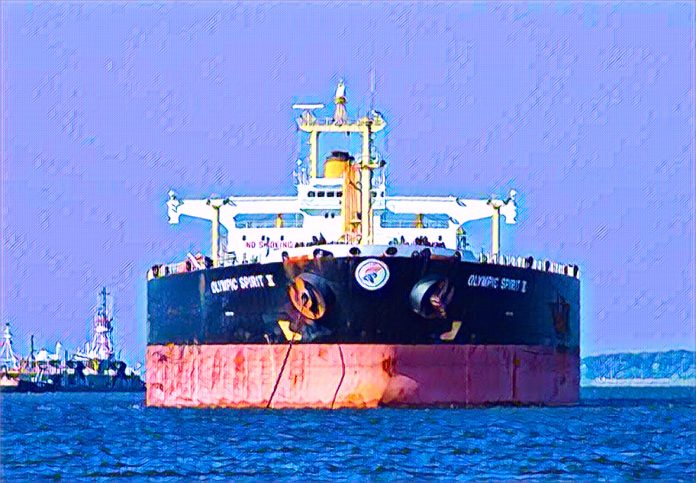
The United States Coast Guard, working with the US Navy, seized a Nigerian-owned supertanker named Skipper over allegations of crude oil theft, piracy, and other cross-border crimes.
The interception involved a Very Large Crude Carrier that is about 20 years old. The vessel carries IMO Number 9304667.
Records show the tanker is owned and managed by Thomarose Global Ventures Ltd in Nigeria. Its registered owner is listed as Triton Navigation Corp in the Marshall Islands.
US officials said the tanker was flying the Guyanese flag when it was stopped. Guyana’s Maritime Administration Department later confirmed that Skipper is not on its ship registry and was using the flag without approval.
According to American security sources, the seizure was carried out under US law enforcement authority. Former President Donald Trump announced the operation.
Investigators are also probing claims that the vessel carried a large shipment of hard drugs and operated within a network tied to suspected Iranian and Islamist-linked money laundering financiers.
A check with the Corporate Affairs Commission in Abuja showed that Thomarose is inactive. Further checks indicated that the company’s listed address is 111 Jakpa Road, Effurun, Warri, Delta State. No phone number is attached to the CAC record.
Experts question oversight in Nigeria’s maritime system
The President of the Centre for Marine Surveyors of Nigeria, Engr. Akin Olaniyan, reacted to the seizure.
He said, “If the vessel emanated from Nigeria, it suggests our Port State Control is practically non-existent.
It also means any vessel leaving Nigerian waters may come under stricter scrutiny by Port State Control authorities in other countries.
This issue has nothing to do with Nigeria as a country, but with regulatory enforcement.”
The National President of the Oil and Gas Service Providers Association of Nigeria, Mazi Colman Obasi, also shared his concern.
He said, “I have never heard that Nigeria has a supertanker and that it is not active in CAC. I don’t even know if stakeholders are aware. Anyway, the government and other agencies can do more.”
The President of the Ship Owners Association of Nigeria, Otunba Sola Adewumi, explained that he could not comment yet because he was still gathering details about the arrest.
He asked for time to confirm the vessel’s ownership and registration status.
Former Director General of NIMASA, Mr. Temisan Omatseye, also said he had only just been informed and could not react fully.
NIMASA stated it has no official information on the case. The agency’s spokesman, Edward Osagie, asked Vanguard to send an official enquiry. He assured that it would be handled properly.
A Port Harcourt-based energy analyst said, “With the existence of some government agencies and the involvement of private contractors, we expected oil theft and other illegal activities to stop or reduce drastically.
One is surprised that this and other practices still go on. All agencies need to do more than they currently do.
No nation can progress if its citizens continue to steal its crude, the resource that enable the nation to generate foreign exchange for economic development.”
NEITI reports massive losses to oil theft
Earlier this year, the Nigerian Extractive Industries Transparency Initiative revealed that Nigeria lost 13.5 million barrels of crude oil valued at 3.3 billion dollars to theft and pipeline sabotage between 2023 and 2024.
Executive Secretary Dr Ogbonnanya Orji shared the findings at the 2025 conference of the Association of Energy Correspondents of Nigeria.
He explained that the missing revenue could have funded a year of the federal health budget or supplied energy access to millions of homes.
Orji noted that Nigeria earned 23.04 billion dollars in 2021 and 23.05 billion dollars in 2022 from the oil and gas sector.
He added that 1.5 trillion naira remains owed to the Federation by several companies and government agencies.
He also said, “Over the past decade, NEITI has evolved from an auditing agency to a governance reform institution.
“We have institutionalised regular audits of oil, gas, and solid mineral sectors, tracking production, payments, and remediation; developed Nigeria’s Beneficial Ownership Register, unmasking the true owners of over 4,800 extractive assets, and helping the government combat corruption and illicit financial flows; and launched the NEITI Data Centre, a national open-data infrastructure that provides real-time public access to industry information.
We have also strengthened partnerships with NUPRC, NMDPRA, and NCDMB to promote transparency in licensing, metering, and host community trust management and introduced the Just Energy Transition and Climate Accountability Framework to ensure that Nigeria’s shift to cleaner energy is transparent, inclusive, and fair.”

