

Key Points
-
Fidelity Bank Supreme Court victory confirmed.
-
Sagecom’s appeal was dismissed entirely.
-
Fidelity Bank Supreme Court win ends litigation.
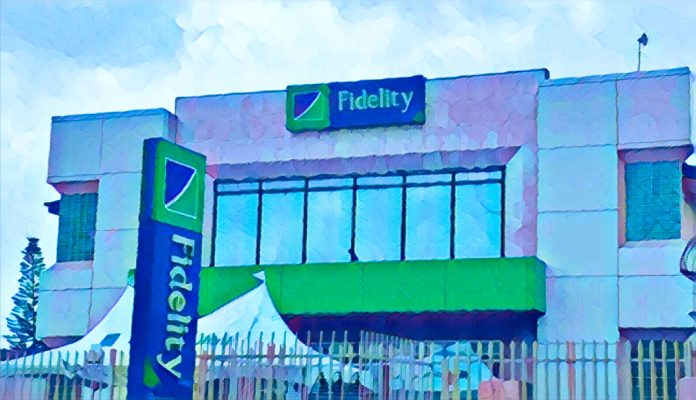
The Supreme Court has delivered a decisive ruling in favor of Fidelity Bank Plc in its long-running legal dispute with Sagecom Concept Limited, bringing finality to a case that has lingered for more than two decades.
A five-justice panel, led by Justice Lawal Garba, ruled on Friday that the Nigerian lender’s appeal should be upheld, reducing the judgment debt burden significantly and marking a major victory in the bank’s protracted legal battle. The decision has drawn widespread attention across the financial sector, ending years of uncertainty over the liability linked to the legacy case.
Supreme Court upholds Fidelity Bank appeal
In a motion dated October 8, 2025, Fidelity Bank requested several clarifications from the Supreme Court. The bank sought a consequential order requiring the judgment debt to be paid in Naira rather than foreign currency. It also asked that interest be calculated at 19.5 percent per annum, instead of the previously awarded 19.5 percent compounded daily, and that the exchange rate for conversion be fixed at the date of the High Court judgment, consistent with the Supreme Court’s earlier decision in Anibaba v. Dana Airlines.
Ruling sets payment and interest terms
Fidelity Bank further requested that the judgment debt payable be set at N30,197,286,603.13, with interest accruing at 19.5 percent per year until settlement. Justice Adamu Jauro granted the first three requests but denied the final two.
This means the lender will pay the judgment sum in Naira at an annual interest rate of 19.5 percent, using the exchange rate applicable on the High Court judgment date rather than the payment date.
Two-decade dispute finally resolved
The dispute traces back to a 2002 credit facility extended to G. Cappa Plc, originating from a transaction involving the former FSB International Bank, which merged with Fidelity Bank in 2005. The Supreme Court’s ruling closes the chapter on a legacy case that had been closely monitored by investors and industry analysts, confirming a far lower liability than the N225 billion previously speculated.
Fidelity Bank’s share price remained stable throughout the proceedings, reflecting confidence in its governance, risk management, and financial strength. Experts say the ruling underscores the bank’s commitment to transparent, responsible management, while the bank expressed gratitude to the Supreme Court for bringing clarity and closure to the matter.

