

KEY POINTS
-
President Bola Tinubu has declared a major policy shift, officially designating bandits and all armed non-state actors as terrorists, and promising a merciless, coordinated military and judicial response.
-
This executive move is reinforced by parliamentary resolve, as the Senate has legally classified banditry and kidnapping as terrorism with a maximum death penalty, while many lawmakers strongly oppose any negotiations with the criminal groups.
-
The intensified crackdown unfolds amidst severe national trauma from recent attacks on schools and places of worship, which have forced widespread school closures and ignited a complex debate between advocates of all-out force and those who believe dialogue is necessary for resolution.
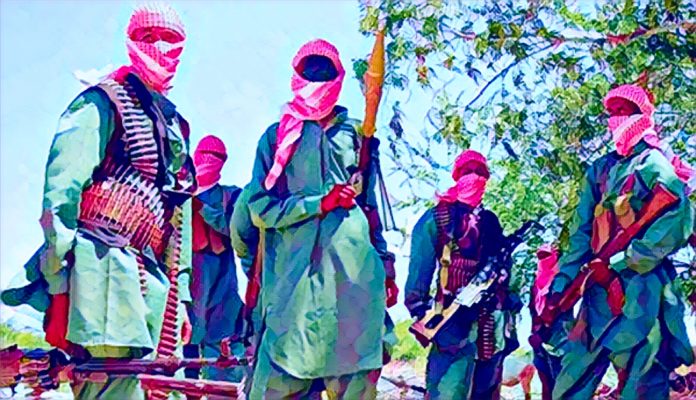
In a decisive shift of national security policy, President Bola Ahmed Tinubu has formally declared bandits and all armed non-state actors as terrorists, vowing to show “no mercy” in a renewed offensive against groups terrorizing the country.
The declaration, made on Friday during the presentation of the 2026 budget to a joint session of the National Assembly, signals a tougher, more coordinated response following a week of devastating attacks that have shaken the nation.
The announcement comes against a backdrop of extreme violence. In just one week, Nigeria suffered three major assaults: the kidnapping of 25 schoolgirls from a secondary school in Kebbi State, a deadly attack on worshippers at a church in Kwara State, and the killing of Brigadier General Musa Uba in an ambush in Borno State.
President Tinubu, who postponed an international trip to address the crisis, stated he was “depressed” by the events, particularly “that heartless terrorists have scattered the education of innocent schoolgirls”.
Under the new framework, groups previously treated as criminal gangs—including bandits, violent cults, militias, and foreign-linked mercenaries—will now be categorized as terrorist threats. “We will usher in a new era of criminal justice,” President Tinubu declared. “We will show no mercy to those who commit or support acts of terrorism, banditry, kidnapping for ransom and other violent crimes”. He outlined a restructuring of the national security architecture around a new counterterrorism doctrine focused on unified command and intelligence gathering.
Parliament Backs Hardline Stance as Military Operations Intensify
The President’s hardline position aligns with and is bolstered by a recent, forceful resolution from the Nigerian Senate. On November 26, the Senate officially designated kidnapping and banditry as acts of terrorism and approved the maximum death penalty for related offences.
Lawmakers demanded a halt to negotiations with bandits, with a coalition of Representatives accusing the government of a “betrayal of the Nigerian people” for engaging in back-channel talks. They argued that such negotiations “incentivize more kidnappings” and “destroy public trust in the state”.
Concurrently, security forces have been conducting intensified operations. The Nigerian Army’s 8 Division recently neutralized five armed criminals in coordinated assaults on bandit hideouts across Sokoto and Zamfara states.
In Kogi State, a critical corridor for criminal movement, a joint security operation uncovered a massive cache of arms and ammunition from criminal hideouts. Governor Usman Ododo credited President Tinubu for charging him to intensify efforts, stating the President told him to “go back and do more” instead of expecting commendation.
However, the crisis has forced painful societal adjustments. In response to the mass abductions of students, the federal government ordered the closure of 41 Federal Unity Colleges across several states. This move has sparked grave concern about the long-term impact on national education.
Analyst Mansur Liman warns that closing schools represents a painful admission of failure and cedes ground to criminals. “If kidnappers can no longer abduct schoolchildren… they will simply shift their targets. They will come into our communities, our homes, our farms, and our highways,” he wrote.
The government’s assertive posture faces immediate challenges and debates. Some security experts question the sustainability of a purely kinetic campaign. Furthermore, the call for a no-negotiation policy is complicated by the immediate need to secure the release of hostages, a tension highlighted by recent rescues in Kwara and Kebbi.
Contrasting views on strategy persist. While lawmakers and groups like Teamsunrise demand the arrest of anyone negotiating with bandits, prominent Islamic scholar Sheikh Ahmad Gumi continues to advocate for dialogue. He contends that bandits are driven by survival and retaliation, stating their position is, “If you kill us, we will retaliate; if you don’t kill us, we won’t kill you”.
As the new “terrorist” designation is implemented, its effectiveness will hinge on translating budgetary allocations and military operations into tangible security for citizens. With the nation at a crossroads, the coming months will test whether this consolidated offensive can restore a sense of safety to Nigeria’s beleaguered communities.

