

KEY POINTS
- His family confirmed that Adekunle Ojora had died on Wednesday.
- He worked in journalism, government, and big companies to build a career.
- The death of Adekunle Ojora signals the end of a corporate leader from after independence.
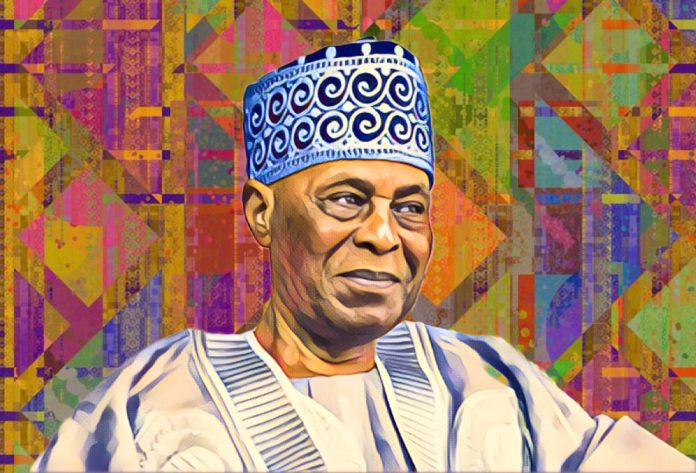
According to his family, Adekunle Ojora, a well-known Nigerian businessman who worked in media, shipping, energy, and real estate, died early Wednesday at the age of 93.
The Lagos Royal Family of the late Chief Abdul Lasisi Ajayi Ojora acknowledged the death in a statement. They also said that he would be buried in Lagos according to Islamic customs. The family urged everyone to pray for his soul.
Toyin Ojora-Saraki, his daughter, signed a statement saying that Ojora died “in full submission to the will of Almighty Allah (SWT).” His wife, Erelu Ojuolape Ojora, his children, grandchildren, and great-grandchildren are still alive.
The death of Adekunle Ojora symbolizes the end of an era
Ojora was born on June 13, 1932. He had an unusual career that included journalism, public service, and running a business. He went to Regent Street Polytechnic in London to study journalism. In the early 1950s, he started working for the British Broadcasting Corporation, where he worked his way up to assistant editor.
He went back to Nigeria in 1955 to work as a reporter for the Nigerian Broadcasting Corporation. Later, he worked as an information officer in Ibadan. Ojora left the public sector at the young age of 29 and became the public relations manager for United African Company. By 1962, he was an executive director.
After the first military takeover in Nigeria in 1966, he was named to the Lagos City Council. A year later, he became both the managing director of WEMABOD and the chairman of the Nigerian National Shipping Line. These two jobs put him at the center of Nigeria’s commercial growth after independence.
The death of Adekunle Ojora ends a business chapter
Ojora later became a big investor and board member in several different fields. He owned shares in Bowring Group, Inchcape, Schlumberger, Phoenix Assurance, UTC Nigeria, Evans Brothers, and Seven-Up, among other companies.
He was also the chairman of AGIP Nigeria Limited from 1971 until Unipetrol bought it in 2002. Ojora oversaw decades of operational expansion throughout times of political and economic instability. Business leaders typically said that his steady leadership kept jobs and institutions stable.
Nigeria has lost one of the last important business leaders from the post-independence generation with the death of Adekunle Ojora. According to Billionaires Africa, fmore than fifty years, his ideas changed the way people worked in boardrooms and private businesses.

