

KEY POINTS
- CAF Africa Cup of Nations Morocco 2025 set digital records.
- Video views nearly tripled compared with AFCON 2023.
- CAF Africa Cup of Nations Morocco 2025 saw strong diaspora engagement.
The Africa Cup of Nations in Morocco has delivered the biggest digital audience in the tournament’s history, underscoring the growing global pull of African football beyond the pitch.
The Confederation of African Football said the CAF Africa Cup of Nations Morocco 2025 generated 6.1 billion digital impressions and 5.2 billion video views across social media platforms, nearly tripling the reach recorded at the previous edition. CAF released the figures on its official channels on Wednesday, describing the performance as unprecedented for a continental football competition.
By comparison, AFCON 2023 attracted about 2.1 billion digital views. The authority said the sharp increase reflects both expanded global interest and a deliberate push into short-form, fan-driven content.
CAF Africa Cup of Nations Morocco 2025 online surge
CAF said the CAF Africa Cup of Nations Morocco 2025 became the most viewed continental football tournament in digital terms, driven largely by organic fan participation. The governing body recorded 285 million engagements during the competition, spanning comments, shares and reactions.
One of the strongest growth areas came from the African diaspora, where millions of new users engaged with match highlights, behind-the-scenes footage and fan reactions. Content moved rapidly across borders and languages, CAF said, reinforcing the tournament’s appeal to younger and digitally native audiences.
TikTok emerged as the dominant platform, with more than one million fan-generated videos created under the hashtag #TotalEnergiesAFCON2025. Clips ranged from goal celebrations and tactical breakdowns to humour, music and fashion inspired by the tournament, turning AFCON into a broader cultural moment.
Morocco hosted the tournament
Hosted by Morocco, the tournament ran from December 21, 2025, to January 18, 2026, and featured newly upgraded stadiums and high-profile musical performances, including appearances by Nigerian star Davido.
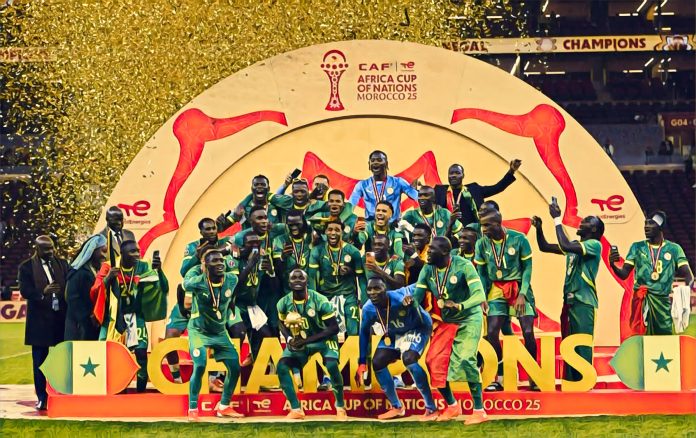
Senegal won the title after defeating hosts Morocco in the final, while Nigeria finished third. Alongside the spectacle, the competition also faced controversy, including disputed refereeing calls, reported VAR malfunctions and several on- and off-field incidents.
CAF said it has since sanctioned Algeria, Senegal and Morocco, as well as a number of players, for various acts of misconduct during the tournament.

