

KEY POINTS
- Tinubu economic reforms have improved executive-legislative cooperation.
- Government targets a $1 trillion economy by 2031.
- Tinubu economic reforms are under review by AFD.
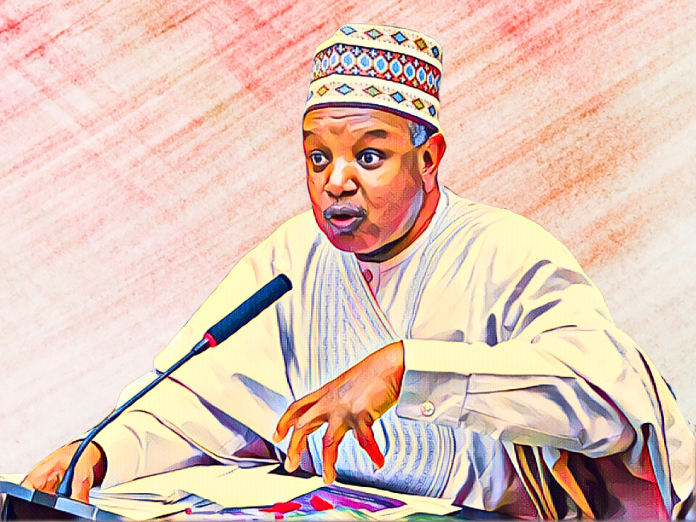
Nigeria’s economic reforms under President Bola Tinubu are reinforcing political stability and improving coordination across federal, state and local governments, Budget and Economic Planning Minister Abubakar Atiku Bagudu said.
Speaking in Abuja during a meeting with a delegation from Agence Française de Développement, or AFD, Bagudu said the administration’s policy shifts have strengthened cooperation between the executive and legislature while improving alignment within the National Economic Council. He argued that the changes have reduced political friction at a time of heightened regional and global uncertainty.
According to the minister, the reforms have helped stabilise the exchange rate and eased pre-election volatility, restoring a degree of confidence among investors and development partners.
Tinubu economic reforms strengthen political coordination
Bagudu said support from the National Assembly has been critical to implementing what he described as bold but necessary macroeconomic adjustments. He added that relations among the three tiers of government have also improved, allowing policies to flow more smoothly from the centre to states and local councils.
“The reforms have improved cooperation between the executive and legislative branches of government,” Bagudu said, noting that lawmakers have backed the administration’s agenda. He added that closer collaboration among federal, state and local governments has become a key outcome of the policy reset.
He outlined the Renewed Hope Ward Development Plan as a core pillar of the strategy. The bottom-up framework seeks to map the economic potential of Nigeria’s 8,809 wards, with the aim of driving inclusive growth through decentralised planning and investment.
The government is further targeting a $1 trillion economy by 2031, Bagudu said, with agriculture, local manufacturing and value-chain development positioned as priority sectors for job creation and household-level food security.
Tinubu economic reforms under external review
While acknowledging short-term pressures on households and businesses, Bagudu said the Tinubu economic reforms remain irreversible and essential to restoring fiscal balance and enabling private-sector-led growth over the long term.
AFD Country Director Jacky Amprou said the agency is reviewing Nigeria’s structural reforms as part of an update to its country risk assessment, which will shape future financing decisions. He noted that Nigeria has undergone significant economic shifts since 2022 and said the mission is seeking clarity on how the government plans to consolidate recent gains.
Amprou added that all future AFD interventions will align strictly with Nigeria’s domestic priorities, as the agency prepares a new Country Partnership Agreement to replace the current framework.

