

KEY POINTS
- Real-time electronic transmission sparks nationwide protests.
- Senate pledges review of real-time electronic transmission clause.
- Real-time electronic transmission seen as key to trust.
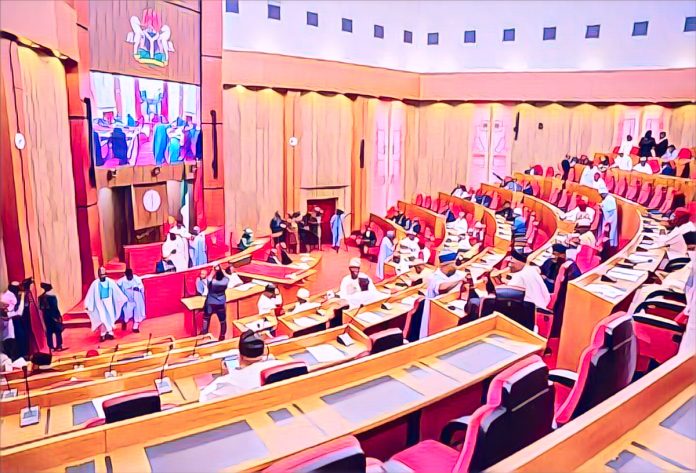
Nigeria’s Senate said it is open to public criticism and peaceful protest over its handling of the Electoral Act Amendment Bill, pledging to address concerns around electronic transmission of election results at an emergency plenary sitting.
The assurance came on Monday as protesters gathered at the National Assembly in Abuja, demanding that lawmakers explicitly restore provisions for real-time electronic transmission of election results in the amended law. The protest added pressure to a growing national debate over electoral integrity ahead of the 2027 general elections.
Senate spokesman Yemi Adaramodu said the chamber will reconvene to review the votes and proceedings from its last sitting, during which lawmakers passed the contentious amendment removing the words “real-time.”
Real-time electronic transmission sparks legislative backlash
Adaramodu, who chairs the Senate Committee on Media and Public Affairs, said Nigerians have the right to express their views peacefully and described public dissent as a core feature of democracy.
Hundreds of demonstrators, mobilised by the Obidient Movement and allied civil society groups, converged on the National Assembly complex under the banner “Occupy the National Assembly.” Security was tightened, with police, soldiers and civil defence personnel barricading entrances to prevent access.
Protesters accused lawmakers of weakening the electoral framework by creating ambiguity around electronic transmission of results. They argued that removing “real-time” leaves room for manipulation during result collation and undermines confidence in the voting process.
Demonstrators carried placards reading “Our votes must count” and “Protect democracy now,” and vowed to sustain pressure until lawmakers restored the wording verbatim in the bill.
This method draws wider support
Furthermore, the protest gained momentum with the presence of former Labour Party presidential candidate Peter Obi, who warned against what he described as a gradual erosion of democratic gains. He said credible elections were essential to national stability and development.
Civil society organisations, including the Nigerian Guild of Editors, Yiaga Africa and the Movement for Credible Elections, also urged the National Assembly to mandate real-time electronic transmission in the law. They warned that the Senate’s position risked deepening mistrust and could undermine preparations for the 2027 polls.
The groups said Nigeria has introduced electoral reforms since 2007, including card readers and the BVAS system, to reduce manual interference, and they urged authorities to reinforce rather than dilute the measures.
Lawmakers face pressure to harmonise their position with the House of Representatives, which retained mandatory electronic transmission in its version of the bill. The outcome of the emergency sitting is expected to shape the credibility of Nigeria’s next election cycle.

