

KEY POINTS
- US Nigeria military cooperation expands with 200 troops.
- Deployment focused on training, not combat.
- US Nigeria military cooperation targets jihadist threats.
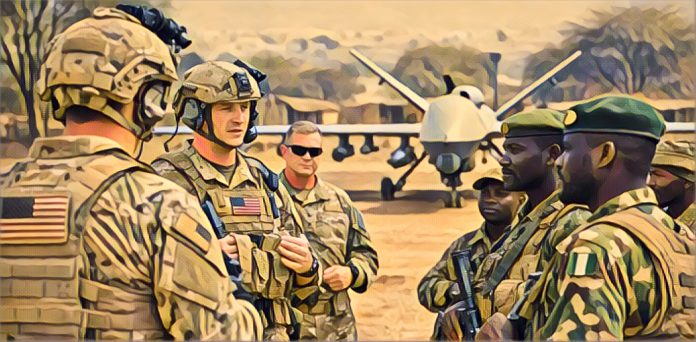
The United States will send 200 troops to Nigeria to train its armed forces, expanding security cooperation as Abuja battles a prolonged insurgency and rising instability across several regions.
Nigerian and U.S. officials confirmed the deployment on Tuesday, describing it as focused on training and technical support rather than direct combat operations. The move builds on an existing U.S. military presence that assists with intelligence and air strike coordination. “We are getting U.S. troops to assist in training and technical support,” Major General Samaila Uba, spokesman for Nigeria’s Defence Headquarters, said.
US Nigeria military cooperation expands
The additional personnel, expected in the coming weeks, will help Nigerian forces coordinate operations that integrate air and ground units, according to U.S. officials. A spokesperson for U.S. Africa Command confirmed the deployment details.
The Wall Street Journal first reported the plan, noting that the contingent would supplement a smaller U.S. team already in Nigeria supporting targeting for air operations. Uba said the troops would not participate in combat missions. “U.S. troops aren’t going to be involved in direct combat or operations,” he was quoted as saying, adding that Nigeria requested the expanded assistance.
Washington has also pledged to provide intelligence support for Nigerian air strikes and accelerate arms procurement processes.
US Nigeria military cooperation amid insecurity debate
The announcement comes as Nigeria faces diplomatic scrutiny from Washington over security concerns. U.S. President Donald Trump has previously described violence in Nigeria as “persecution” and “genocide” against Christians, a characterisation rejected by Abuja.
While some attacks have targeted Christian communities, analysts note that Muslims have also been killed in large numbers in violence attributed to Boko Haram and Islamic State affiliates. Nigeria’s government maintains that the crisis reflects broader security failures and resource conflicts rather than systematic religious persecution.
While security challenges remain multifaceted, Nigeria continues to confront a jihadist insurgency in the northeast, criminal gangs engaged in kidnappings in the northwest and recurring clashes between farmers and herders in the central belt, often linked to competition over land and water. The deployment signals a deepening of US Nigeria military cooperation at a time when both governments are seeking to contain militant threats and stabilise the region.

