

KEY POINTS
- The Senate passed the 2026 Electoral Act amendment after a heated session and a division vote on electronic result transmission rules.
- Lawmakers retained a clause allowing manual transmission of results if electronic systems fail, despite opposition protests.
- The bill was reconsidered due to concerns about the 2027 election timetable and technical inconsistencies in several clauses.
Proceedings in the Nigerian Senate turned tense on Tuesday before lawmakers finally approved the Electoral Act, 2022 (Repeal and Re-Enactment) Bill 2026, following a dramatic session marked by disputes, procedural arguments, and a division vote.
The uproar began when Enyinnaya Abaribe of the African Democratic Congress demanded a formal vote on Clause 60, a section dealing with the transmission of election results.
Senate President Godswill Akpabio initially suggested the request had already been withdrawn, prompting immediate objections from opposition lawmakers.
Deputy Senate President Barau Jibrin cited procedural rules to argue that reconsidering the issue would be out of order, but his intervention only intensified tensions on the floor.
Division Vote Over Manual Transmission Clause
The disagreement escalated when Abaribe formally invoked Senate rules to request a division on Clause 60(3).
He specifically sought the removal of a proviso allowing manual transmission of results if electronic transmission fails, arguing that relying on manual alternatives could undermine transparency.
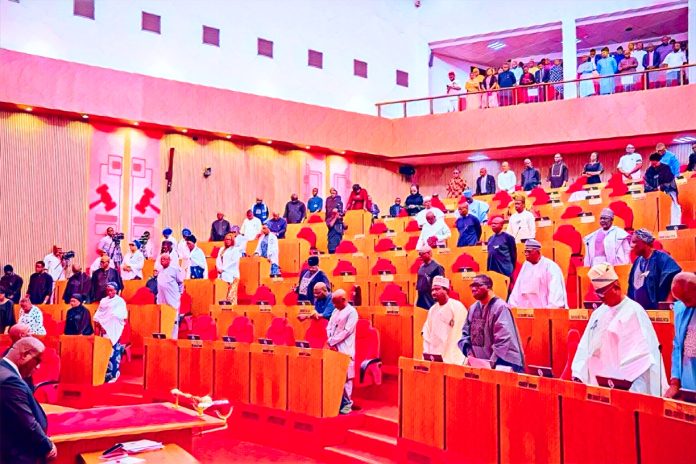
During the vote, Akpabio asked senators who supported retaining the clause to stand, followed by those against it. Fifteen opposition senators opposed the provision, while fifty-five supported it, meaning the Senate voted to keep the manual-transmission fallback in the bill.
The vote followed a brief confrontation between Abaribe and Sunday Karimi, highlighting the charged atmosphere surrounding the debate.
Earlier in the sitting, Senate Leader Opeyemi Bamidele successfully moved a motion to rescind the chamber’s previous passage of the bill so lawmakers could reconsider it clause by clause. The Senate then dissolved into the Committee of the Whole to review the legislation in detail.
During deliberations, murmurs spread across the chamber as senators gathered in clusters to consult, leading to a temporary closed-door session before proceedings resumed.

