

KEY POINTS
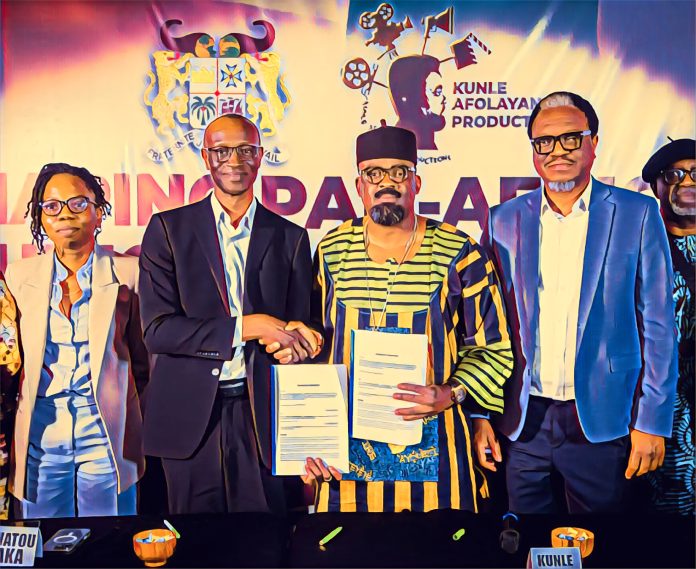
- Kunle Afolayan has partnered with the Benin Republic government to produce a major Orisha/Vodun-themed TV series.
- The project will use advanced technologies such as AI pre-visualisation and virtual environments to enhance production quality.
- The collaboration is expected to strengthen West African cultural storytelling and expand the region’s influence in global entertainment.
Award-winning Nigerian filmmaker Kunle Afolayan has entered into a historic production agreement with the government of Benin Republic to co-create a large-scale television series rooted in Orisha and Vodun spirituality, two of West Africa’s most influential traditional belief systems.
The ambitious project is designed to merge Nigerian and Beninese mythological traditions into a unified narrative aimed at international audiences.
According to early production details, the series will deploy cutting-edge filmmaking tools, including artificial intelligence for pre-visualisation, digital scene construction, and virtual environments.
These technologies are expected to enhance storytelling scale while reducing production constraints, positioning the project among the most technically advanced television productions ever attempted in West Africa.
Afolayan: Expanding Global Footprint
Afolayan has built a reputation for elevating the technical and narrative quality of African cinema. His acclaimed productions such as Aníkúlápó and Recall, both distributed internationally via Netflix, showcased his ability to blend indigenous storytelling with universal themes.
Industry analysts say the new collaboration signals his transition from national film figure to regional creative powerhouse.
The joint production initiative is also seen as a cultural diplomacy milestone.
By combining talent, folklore, and resources from Nigeria and Benin, the project seeks to strengthen creative ties across West Africa while presenting authentic African spirituality and history to global audiences, countering decades of misrepresentation in foreign media.
Observers note that if successful, the partnership could inspire similar regional co-productions, strengthening West Africa’s film ecosystem and boosting the global competitiveness of its storytelling industry.

