

KEY POINTS
- FEC approved the demolition of Carter Bridge and allocated N5.6bn for design and costing.
- Technical assessments concluded the bridge is beyond rehabilitation.
- The government targets commissioning four completed projects per zone by May 15.
Nigeria’s Federal Executive Council has given the green light to demolish Carter Bridge in Lagos and replace it entirely, closing the book on years of back-and-forth assessments about whether engineers could still save the aging structure.
Works Minister David Umahi announced the decision Wednesday after a FEC meeting chaired by President Bola Tinubu at the State House in Abuja. The council approved N5.6 billion for Advanced Engineering Consultants to carry out detailed design and costing for the new bridge, which must come before any construction contract goes to procurement.
“The total recommendation was that Carter Bridge can no longer be rehabilitated. We should demolish it and construct a new bridge,” Umahi told journalists.
A Long Time Coming for the Carter Bridge demolition
The decision follows a chain of technical reviews stretching back years. Underwater inspections conducted in 2013 and again in 2019 revealed that the bridge’s piers had suffered serious deterioration from illegal sand mining, ocean currents and corrosion. Julius Berger Nigeria, which conducted the most recent structural investigation, recommended full demolition and reconstruction as the only viable path forward.
Earlier government estimates put rehabilitation of Carter Bridge at roughly N386 billion, while building a new structure entirely would cost approximately N359 billion. Officials ultimately concluded that rehabilitation was not only more expensive but technically unfeasible given the state of the foundation.
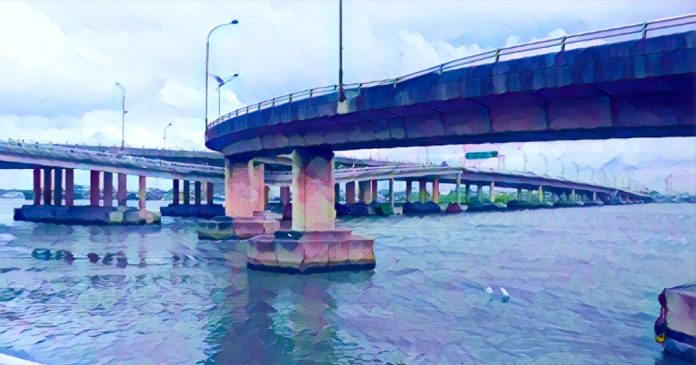
Carter Bridge connects Lagos Island to the mainland and carries a significant share of daily traffic across one of Africa’s most congested cities. The government has already restricted heavy trucks from using it as a precautionary step.
Part of a Wider Infrastructure Push
The Carter Bridge decision was one of six major infrastructure approvals FEC made at Wednesday’s meeting. The council also approved the reconstruction of the Abuja-Lokoja Road at N146 billion, with five contractors including Julius Berger handling the work. Additionally, it approved the Ibadan-Ife-Ilesa Road, a 103-kilometre dual carriageway valued at N427 billion, and Phase Two of the Keffi-Nasarawa-Abaji Road at N203 billion.
Umahi said the administration intends to commission at least four completed projects in each of the country’s six geopolitical zones by May 15. “These are also palliative works,” he stressed. “They are major infrastructure projects.”

