

Key Points
- Saror blames northern Nigeria’s leadership for allowing Fulani militancy, religious extremism and jihadist activity to grow unchecked for over two decades.
- Saror reveals he personally killed Obasanjo’s third term bid by refusing three times to second the motion on the Senate floor.
- He warns that Nigeria risks disintegration if the federal government fails to confront ethnic and religious violence driving insecurity across the North.
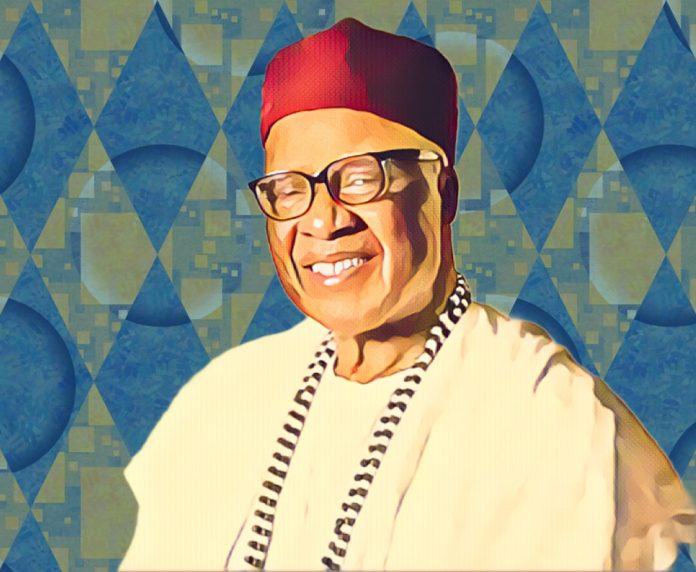
Prof. Daniel Saror was standing at Tafawa Balewa Square in Lagos in 1960 when Nigeria became a free country.
He was a student from the North, and like everyone around him that day, he ran around the square with the independence flag and believed in what was beginning.
He is 85 years old now. And the country he believed in that day, he says, is barely holding together.
“What we are seeing today in Nigeria, nobody expected it,” Saror said in a recent interview. “Nobody anticipated it in 1960. A situation where insecurity has taken over the country to the extent that we are almost a failed state.”
Saror is not an ordinary voice in the wilderness. He served as the seventh Vice Chancellor of Ahmadu Bello University, Zaria.
He represented Benue North East in the Senate from 1999 to 2007 and served as Senate Minority Leader. He helped block former President Olusegun Obasanjo’s attempt to extend his tenure beyond the constitutional limit. He knows Nigeria’s power structure from the inside.
What he is saying now is pointed, deliberate, and unsparing.
“Northern Nigeria Has Become the Problem”
The professor did not soften his diagnosis. He said the insecurity consuming the country, particularly its northern half, did not arrive by accident and has not been contained because of a fundamental failure of northern leadership.
“I dare say that northern Nigeria has become the problem of Nigeria,” he said, “because they have allowed this kind of situation to grow without any attempt to contain it or to reduce its impact.”
He traced the current wave of violence to around 2011, when he said Fulani herdsmen began moving into communities across the North Central in more aggressive and organized ways.
In 2014, then-Benue Governor Gabriel Suswam set up a committee to examine the crisis. Saror was a member. Retired Gen. Atom Kpera chaired it.
What they found, Saror said, shook them.
“We saw Fulani militants. They were not carrying cattle with them, but they were heavily armed. They were destroying villages and putting up some Islamic flags in white and green.”
He said vast areas of Agatu, Gwer West, Makurdi, Guma, Logo, Kwande, and Ukum local government areas in Benue State have since been occupied.
Communities his committee visited in 2014 remain under occupation today, including the village of the paramount ruler who was alive at the time.
A Veterinarian’s Verdict on Herdsmen Policy
Saror is not just a politician commenting from a distance. He trained as a veterinarian and spent years living among Fulani communities in Plateau State as a young Livestock Assistant.
“I lived in Maide Taro, near Bukuru, with Fulani for months,” he said. “No problem.”
That context makes his current assessment harder to dismiss. He argued that the method of livestock husbandry in Nigeria has been deliberately politicized, militarized, and weaponized, and that the resistance to ranching has nothing to do with practicality.
“Every time somebody says, ‘let us practice modern husbandry, let us practice ranching,’ northerners will jump and kick against it purely on their own religious sentiments,” he said.
“Not the reality or the fact that ranching is the best way to raise cattle anywhere in the world.”
He said the Buhari administration provided Fulani herdsmen with AK-47 rifles while no other civilian group in the country was permitted to carry such weapons, a point he said reveals the political nature of the crisis rather than any genuine pastoral need.
He described the violence in Benue as unlike anything he could associate with the Islamic faith, noting that traditional Islamic rules on killing do not permit the kind of brutality he said communities there have experienced.
On Obasanjo’s Third Term: “It Died on the Floor of the Senate”
Saror shifted gears when the conversation turned to politics, and offered one of the most detailed firsthand accounts of how Obasanjo’s third term agenda collapsed in the Senate chamber.
He confirmed, without hesitation, that the agenda was real, despite Obasanjo’s public denials.
“There was a third term agenda. A lot of money was expended. I myself was offered a lot of money by late Tony Anenih.”
He said many senators took the money. He did not.
“If I was to take the money I was offered, I would be the richest person in Benue State.”
The decisive moment, he said, came when then-Majority Leader Dr. Dahiru Sarki Tafida moved a motion on the Senate floor to amend the constitution to permit a third term. Under parliamentary procedure, the motion required the Minority Leader to second it.
Saror refused.
Senate President Ken Nnamani asked Tafida to move the motion a second time. Saror refused again. A third time. Another refusal. Nnamani then hit his gavel, and the third term agenda died on the spot.
“Nobody heard of it again after that,” Saror said.
He said he consulted with then-Benue Governor George Akume and other senators before that session and found broad opposition.
He said a senator whose name he withheld is currently writing a book that will reveal the full extent of what the Obasanjo government attempted.
On Today’s Senate
The contrast between the Senate he served in and the one that exists now, he said, is jarring.
He recalled that lawmakers in 1999 earned just N13,000 a month before the Revenue Mobilisation Allocation and Fiscal Commission set the figure at N67,000.
“The Senate changed when David Mark became Senate President,” he said, noting that legislative salaries ballooned to levels he called unconscionable. “There is no job you can do on earth that will earn you that kind of money every month.”
He said the consequence of this is an electoral system driven by desperation rather than service. Politicians fight over offices because of the financial reward attached, not out of any genuine commitment to constituents.
He was equally direct about the Senate’s resistance to mandatory electronic transmission of election results, calling it a deliberate effort by the political class to preserve the manipulation mechanisms that keep them in power.
“The Senate is failing to realize that it is not doing itself any good by refusing to adopt the mandatory transmission of election results,” he said. “Without it, there will always be manipulation.”
He added that he believes the presidency is involved in the Senate’s resistance, though he acknowledged he has no documentary proof.
Local Government Funds and Rural Poverty
Saror, who served on the Appropriations Committee throughout his Senate years, argued that the systematic diversion of local government allocations by state governors is one of the most destructive and least discussed crises in Nigeria.
He said every local government ward should, in principle, have a dedicated development budget funded by the third tier of government.
Instead, that money flows to state accounts and is distributed arbitrarily by governors with no accountability to the communities it was meant to serve.
“If allocation of the local government is available to them, I believe that development at the rural areas will be much different to what it is now,” he said.
The Supreme Court has issued rulings on the matter, he acknowledged, but said it changes little while the constitutional framework still allows states to receive and control the funds before passing any portion to local authorities.
The Benue Feud and a Warning to Alia
On the ongoing political dispute between Sen. George Akume and Benue Governor Hyacinth Alia, Saror was measured but clear. He advised Alia to seek reconciliation.
“Akume has been the leader of politics in Benue State for the last 24 to 25 years,” he said. “He has a followership.”
At the same time, he said the relationship should not become one where the state’s resources are handed over to any single individual’s control.
Alia, he said, should pursue peace while continuing the development work he has started, and improve his administrative style.
At 85, One Fear Remains
The interview ended on a note that was more personal than political.
Saror said Nigeria’s national unity is being eroded daily by groups who assert dominance through religion and violence, and that the trajectory, if unchanged, points toward disintegration.
“I pray that the President and his team will be able to get their act together before Nigeria disintegrates,” he said, “because at this rate the prospects of national unity are increasingly diminished every day.”
He acknowledged he will not live to see how the story ends.
“At 85, I’m afraid I won’t see a better Nigeria,” he said quietly. “I know I will not be alive. But what it looks like to me is that they are on an offensive, a religious offensive, and this offensive is not based on any good intentions. It’s based on conquest and domination and control.”
He paused.
“That is not a country.”

