

KEY POINTS
- Local food vendors across Nigeria are buying cheap unripe tomatoes, blending them into paste, and adding synthetic dyes including Allura Red and Carmoisine to fake the appearance of ripe, fresh tomatoes.
- Rising food inflation is driving vendors to replace natural ingredients with industrial colorants that carry health risks and have faced regulatory bans in several countries.
- Nigeria’s food safety agencies have no visible enforcement presence in the informal street food sector where millions of Nigerians eat every day, leaving consumers fully exposed.
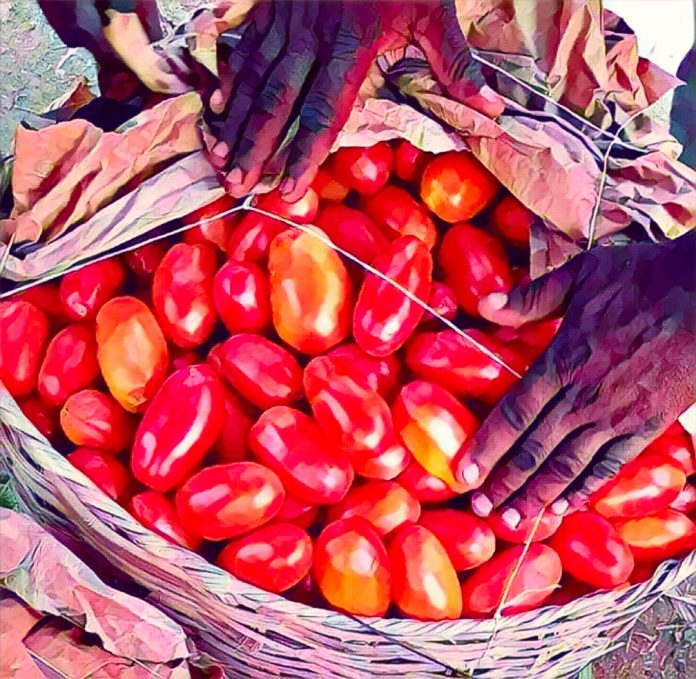
The tomatoes at many local food stalls across Nigeria look perfectly ripe. They are not.
Rising food prices have pushed a growing number of local food vendors to buy cheap, unripe green tomatoes, blend them into paste, and then add synthetic food coloring to give the sauce its familiar red appearance.
The practice, which vendors and food traders describe openly, is spreading quietly through the informal food economy as the cost of fresh, ripe tomatoes continues to climb beyond what small-scale cooks can absorb.
It is the kind of shortcut that stays invisible until someone tells you it is happening.
What Goes Into the Pot
The mechanics of the deception are not complicated. Unripe tomatoes are significantly cheaper than ripe ones.
A vendor buys a batch, blends it, and stirs in a synthetic colorant, sometimes combined with sachet tomato paste or other additives, until the mixture looks indistinguishable from the real thing.
Some vendors mix a few good tomatoes in with the unripe ones to stretch the batch further. Others skip the ripe tomatoes entirely.
Grace Hamzat, a clothing vendor who eats out regularly, said she has noticed the difference in taste even when she cannot see the source.
“Most times these unripe tomatoes either give the sauce a bitter or soured taste,” she said. “That is why I prefer buying food in eateries than from some local restaurants. If you are opportuned to see the type of tomatoes most of them use to prepare meals, you will always prefer to prepare your meals from your kitchen.”
Felix Osaponwan, who operates a commercial tomato grinding business in Lagos, said he watched it happen firsthand with his own customers.
“Some of my customers, who sell cooked food, usually mix a reddish substance with their freshly ground tomatoes,” he said. When he asked about it, he initially got a vague answer. It was a helper who finally told him straight: it was food coloring.
“This made me stop patronizing local food vendors within and outside my area,” Osaponwan said. “These days, there is nothing people will not do to make profit.”
The Tell-Tale Signs
A tomato seller who gave her name only as Racheal said the shift among local cooks has become impossible to miss from where she stands in the market.
“Nowadays, you hardly see a local cooked food seller buying ripe tomatoes,” she said. “Some buy few good ones and mix it with pressed ones. Others buy green ones and add sachet or tin tomato paste to make it red.”
She said one visible sign of the practice shows up in rice dishes. “When you are eating rice and stew, you will see the colour of the rice is pink,” she said, a telltale outcome when certain colorants bleed into the dish during cooking.
What Is Actually Being Added
The colorants being used are not obscure. They are synthetic food dyes common in processed commercial products, now being introduced into fresh-cooked food without any labeling or consumer awareness.
Vendors are reportedly using substances including Erythrosine, Ponceau 4R, Carmoisine, also listed as E122 on food product labels, and Allura Red, a widely used red dye found in packaged goods across the world.
Years ago, vendors who wanted to deepen the red color of tomato-based sauces used natural additives.
Beetroot, paprika extract and red bell peppers were blended in alongside the tomatoes to boost color without altering safety. That practice has largely given way to synthetic options because they are cheaper and more consistent.
The shift matters because the synthetic dyes being used are not universally considered safe at all consumption levels.
Carmoisine and Ponceau 4R have faced regulatory scrutiny in several countries, and their casual, unregulated use in open-market cooking, without any dosage control or disclosure to consumers, represents a risk most diners have no way of knowing they are taking.
A Systemic Problem With No Guardrails
What is unfolding in local food markets is not the work of a few bad actors. It is a rational response, however damaging, to an economic squeeze that has left many vendors unable to run a viable food business using quality ingredients at current market prices.
Nigeria’s inflation rate has hammered food prices across the board. Tomatoes, which spoil quickly and are vulnerable to supply chain disruptions, have been among the hardest-hit commodities.
Vendors working on thin margins in outdoor stalls and small restaurants face a brutal arithmetic: use cheaper ingredients or shut down.
The problem is that the solution they have landed on shifts the cost onto customers, not in cash, but in health risks they cannot see and did not agree to.
There is no visible regulatory enforcement at the level where this is happening. Street food vendors operate outside the reach of most food safety inspections.
The National Agency for Food and Drug Administration and Control, NAFDAC, focuses primarily on packaged and processed products. The informal cooking sector, where millions of Nigerians eat daily, remains largely unmonitored.
Osaponwan put it plainly: “There is nothing people will not do to make profit.”
He is probably right. But profit made by quietly dyeing food and serving it to people who trust what is on their plate is not just a business decision.
It is a public health problem hiding in plain sight, seasoned and plated and handed across a counter every day across the country.

