

KEY POINTS
-
PDP chieftain Segun Showunmi criticised an Al Jazeera interview between Mehdi Hassan and presidential aide Daniel Bwala, describing it as hostile and unprofessional.
-
Showunmi defended Bwala’s political defection, saying shifting alliances are a normal feature of democratic politics.
-
The interview has sparked debate over confrontational journalism, with mixed reactions from viewers and commentators.
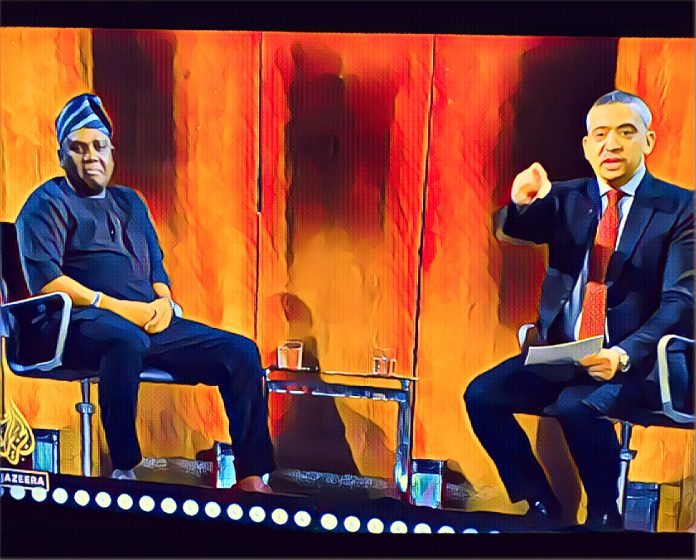
A chieftain of the Peoples Democratic Party in Ogun State, Segun Showunmi, has criticised an interview conducted by Al Jazeera journalist Mehdi Hassan with Daniel Bwala, Special Adviser to President Bola Tinubu on Media and Policy Communication, describing the exchange as hostile and unprofessional.
Showunmi made the remarks in a post on social media platform X, where he argued that the tone and approach of the interview went beyond firm questioning and entered the territory of personal attacks. In his comments, Showunmi said journalism should maintain a balance between rigorous questioning and professional conduct. According to him, the exchange between Hassan and Bwala did not meet that standard.
He argued that there is a clear distinction between tough journalism aimed at serving the public interest and hostile questioning driven by an interviewer’s personal agenda.
Showunmi said the interview appeared to prioritise confrontation over meaningful engagement, adding that such an approach risks undermining the credibility of journalism.
Concerns over interview format
The interview, which aired on Al Jazeera’s Head to Head programme, drew attention after clips circulated widely online. Showunmi described the interaction as resembling a public ambush, claiming that Bwala’s responses were repeatedly interrupted while questions were framed in a confrontational manner.
According to him, professional interviewing requires discipline and fairness, noting that when the objective shifts from seeking insight to humiliating a guest, the integrity of the process can be compromised.
Showunmi also addressed criticisms directed at Bwala over his past statements about President Tinubu before joining the All Progressives Congress from the Peoples Democratic Party.
He argued that political realignment is common in democratic systems, where former rivals can later collaborate due to changing political circumstances.
According to him, such shifts should not automatically be interpreted as dishonourable, but rather as part of the evolving dynamics of democratic politics.
The PDP chieftain further criticised the interview for failing to focus on what he described as Nigeria’s most pressing issues, including economic reforms, insecurity, and governance challenges.
He said the opportunity could have been used to engage the presidential aide on policy matters and government strategies instead of concentrating primarily on past political statements.

