

Key Points
- UNICEF estimates 18.3 to 20 million Nigerian children of school age remain out of school, with the majority concentrated in the north
- Banditry and terrorism are pushing Almajiri children out of rural northern communities and into Abuja
- President Tinubu approved a national policy on Almajiri education in November 2025, targeting 157 model schools and 119 vocational learning centers
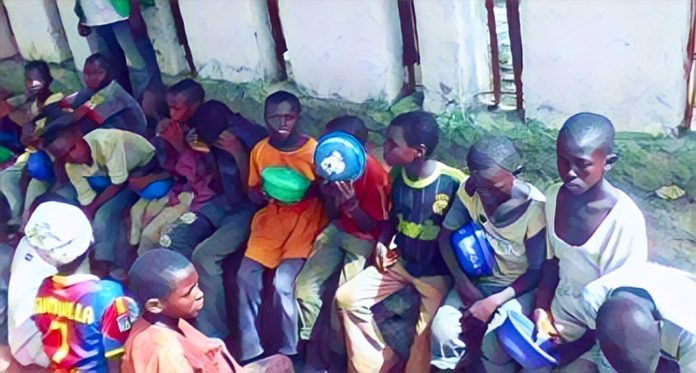
Thousands of children from Nigeria’s north are arriving daily on the streets of Abuja, driven out of their rural communities by poverty, banditry and a centuries-old Islamic educational tradition that leaves them dependent on begging to survive.
Nine-year-old Aminu left his family in Kankiya, Katsina State, to study Arabic and memorize the Quran under a Mallam, a traditional Islamic teacher.
He now begs for food and cash at a busy bus stop in Kubwa, a suburb of Nigeria’s capital. He has never attended a formal school. His father, he says, considers it forbidden.
“I’m an Almajiri,” he declares without hesitation.
Insecurity accelerating an old crisis
For 17-year-old Mansur Liman of Zamfara State, the journey to Abuja was a matter of survival. Bandits attacked his village and attempted to recruit him into their ranks.
He fled first to Kano, then to Abuja, carrying little more than a bag of clothes and a determination to continue his Islamic education away from the violence consuming his community.
His story mirrors that of millions. The United Nations Children’s Fund estimates that between 18.3 and 20 million Nigerian children of school age are currently out of school, with roughly 8 million of them concentrated in the Northwest alone.
More than 80 percent of Nigeria’s out-of-school children live in the north.
Analysts point to entrenched poverty, cultural resistance to western education, inadequate infrastructure and chronic underfunding as the primary drivers.
A 2000 policy report commissioned by Arewa House recommended that northern states allocate at least 26 percent of annual budgets to education.
More than two decades later, only three of Nigeria’s 19 northern states, Kano, Jigawa and Kaduna, meet that benchmark.
Government moves to reform the system
The federal government is now attempting a structural overhaul. In November 2025, President Bola Tinubu approved a national policy on Almajiri education, building on legislation signed by former President Muhammadu Buhari in May 2023 that established the Almajiri Commission.
The policy integrates Quranic instruction with literacy, numeracy, critical thinking and vocational training. It targets construction or recovery of 157 model schools and the establishment of more than 119 learning centers.
The government also plans to pay Mallams a stipend, eliminating the financial pressure that pushes children into alms-seeking.
Educationist Ikwulono Oguche welcomed the framework but urged caution. “We are never short on brilliant ideas and policies in this country,” he said.
“What has always been our greatest challenge is implementing them.”
He warned that without the active buy-in of traditional rulers and Islamic religious leaders, meaningful reform of the Almajiri system remains unlikely.

