

Key Points
- Terrorists linked to Bello Turji attack Bargaja at 1:30 a.m., killing two vigilantes and forcing hundreds of women and children to flee
- The Nigerian army convinces displaced residents to return after promising to protect the community
- Northern civil society groups demand urgent military action, warning that state authority is collapsing across the Northwest
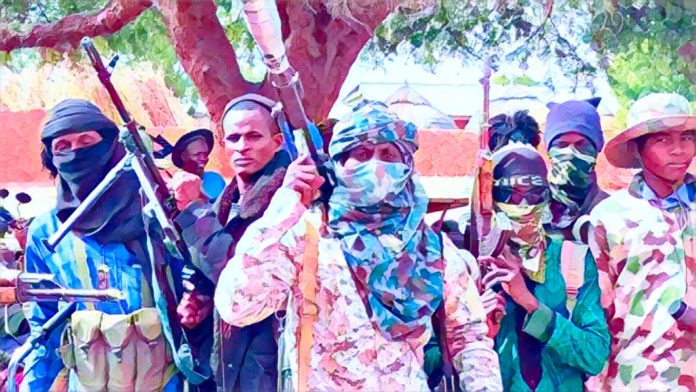
Terrorists linked to notorious bandit leader Bello Turji stormed the Bargaja community in Isa Local Government Area of Sokoto State at approximately 1:30 a.m. last Sunday, killing two vigilantes, wounding others, and triggering a mass flight of residents who said the government had done nothing to stop years of relentless attacks.
A video circulated widely online Monday showed hundreds of women and children, clutching their belongings, scrambling to board a truck as they prepared to abandon the town entirely following a direct warning from Turji’s camp: leave or be killed.
“The terrorists kept attacking us and killing us,” a male voice said in Hausa in the video. “We are tired and we are leaving the town.
Even today, we were attacked and some of us were killed, but the government is doing nothing.”
Army persuades residents to stay
The Garrison Commander of the 8 Division of the Nigerian Army told reporters that military authorities intervened and persuaded residents to remain in Bargaja, with a promise of protection. Residents accepted and returned.
Security analyst Bashiru Altine Giyawa confirmed the attack, describing Bargaja as one of the few communities in the area that had consistently resisted incursions by armed groups loyal to Turji.
Local vigilantes engaged the attackers in a firefight in an attempt to repel the assault.
“The vigilante group confronted the bandits in a fierce exchange of gunfire,” Giyawa said. “Unfortunately, two vigilantes lost their lives during the confrontation.”
The two men killed were identified as Umaru Biri and Garba Mumminu.
A community hollowed by a decade of violence
Bargaja was once a productive agricultural settlement known for sweet potato and soya bean cultivation and a robust livestock economy whose output fed markets well beyond Sokoto State.
Nearly a decade of violent incursions linked to Turji’s network has reduced it to a community living under permanent threat.
Farmers have abandoned their fields. Livestock rustling has gutted household incomes. Kidnapping for ransom has forced families to liquidate assets to free abducted relatives.
Neighboring communities, including Tidibale and Katanga, face similar conditions, extending an arc of insecurity across eastern Isa LGA.
“What used to be distant stories have become our everyday life,” one local farmer said. “We cannot sleep peacefully anymore.”
Women and children have borne a disproportionate share of the crisis, facing displacement, reduced access to healthcare, and disrupted schooling.
Community leaders say the situation has the characteristics of a full humanitarian emergency.
Who is Bello Turji
Turji, 32, was born and raised in the pastoral Fulani settlements of Shinkaffi in Zamfara State. He has terrorized the Northwest, particularly Zamfara, Sokoto, and Niger states, for two decades.
The military declared him wanted four years ago alongside 18 other terrorist figures and placed a 5 million naira bounty on his head. He has continued operating since.
Civil society groups demand federal action
The Coalition of Northern Groups condemned the displacement of Bargaja residents as evidence of a security system under severe strain.
National President Jamilu Aliyu Charanci said communities were being forced from their homes while armed groups operated with impunity.
“The persistent attacks and displacement of communities indicate a dangerous weakening of state authority and an erosion of public confidence in the nation’s security institutions,” Charanci said. “The government must respond with urgency or be held accountable.”
Murtala Abubakar, president of the Arewa Defence League, said the Bargaja episode exposed a widening gap between government policy and actual conditions in vulnerable communities.
“The situation in Bargaja shows that there is still a gap between policy decisions and actual security presence in local communities,” Abubakar said.
“For residents of affected areas, safety is measured not by official statements but by their ability to live and work without fear.”

