

KEY POINTS
- Akpabio says Nigerians are yet to see the best of President Tinubu despite progress already made.
- He credits Tinubu with fuel subsidy removal, exchange rate harmonisation, and major infrastructure completions.
- Speaker Abbas calls for Tinubu’s continuity, arguing started reforms must be seen through to completion.
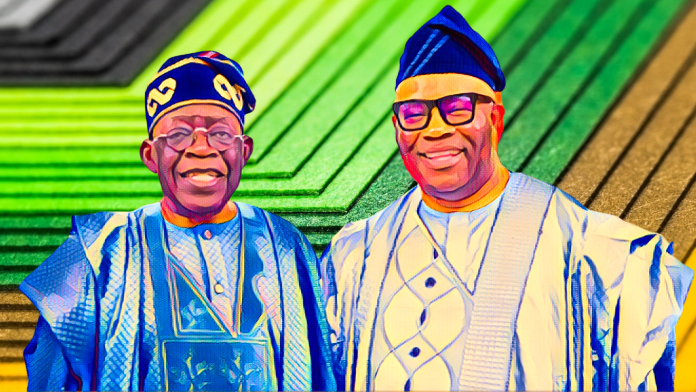
Senate President Godswill Akpabio took the microphone at the 8th All Progressives Congress National Convention Friday and delivered what amounted to an extended endorsement of President Bola Tinubu, telling delegates and the president directly that the country had not yet witnessed the full extent of what his administration could achieve.
The Akpabio Tinubu APC convention address in Abuja drew a distinction between sight and vision, with Akpabio arguing that while many people possess the former, Tinubu demonstrated the latter by steering Nigeria toward a new era of dignity and global respect despite inheriting one of the most difficult economic environments any incoming president had faced. “Nigerians are yet to see the best of you. Despite the difficult economy, you are turning things around and bringing dignity back to Nigeria on the world stage,” Akpabio told the president.
Reforms cited as evidence of progress
To support his assessment, Akpabio pointed to a list of concrete policy and infrastructure outcomes. These included the removal of the petrol subsidy, the harmonisation of multiple exchange rates, student loan programmes and education sector reforms, the completion of the Lagos-Ibadan and Ajaokuta rail lines, and the commencement of the Niger Delta coastal road project. Furthermore, he highlighted the expansion of APC’s gubernatorial footprint to 32 governors as evidence of the party’s growing dominance under Tinubu’s leadership.
Akpabio also assured the president of the full legislative backing of the 10th National Assembly.
Abbas makes the case for continuity
The Akpabio Tinubu APC convention message found an echo in the remarks of House Speaker Tajudeen Abbas, who framed the administration’s reform programme as a necessary rather than comfortable path. Abbas argued that the economic inheritance Tinubu received carried unsustainable commitments that made difficult reform inevitable; he therefore called for the president to serve beyond the current term.
“Reform is not a threat; it is a journey. This is why I urge that President Tinubu must continue, not for convenience, but because the work has begun and must be completed,” Abbas said. He additionally called for greater legislative stability, arguing that Nigeria’s high lawmaker turnover rate weakened institutional memory and undermined the legislature’s ability to support sustained executive reform.

