

Key Points
- At least 20,000 people have been displaced from Kwara communities since April 2024, with many now scattered across Ilorin, Minna and Lagos.
- Between January 2025 and February 2026, more than 300 people were killed in Kwara, a figure 16 times higher than the state’s average annual death toll.
- The Kwara South Development Forum says over 20 communities have been fully deserted, including the deputy governor’s hometown.
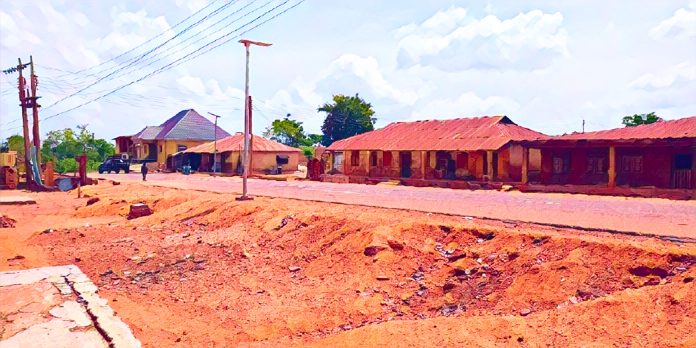
Walk into Motokun village on a weekday morning and the silence will unsettle you. No children sprinting toward school. No women at the mortars. No farmers hauling hoes toward the fields.
Just doors left ajar, compounds filling slowly with dust and the particular stillness that follows when an entire community decides, collectively, that staying is no longer survivable.
Motokun is one village. The list of communities like it across Kwara North and parts of Kwara South is long and growing.
A slow, violent erasure
Community-level data reviewed by Saturday PUNCH put the number of displaced residents at no fewer than 20,000 since April 2024. They are scattered now, in Ilorin with relatives, in unfinished buildings in Minna, in single rooms in Lagos, in the margins of cities that were never supposed to be their homes.
Between January 2025 and February 2026, more than 300 people were killed across Kwara, a figure 16 times higher than the state’s average annual death toll.
Dataphyte’s analysis of Armed Conflict Location and Event Data Project records shows that the number of insecurity-related incidents increased by 78 percent between 2024 and 2025, while fatalities surged by 921 percent over the same period.
In Lata Nna, also in Patigi, pots sit on cold stoves. In Gada village in Edu Local Government Area, farmlands that once yielded yam, maize and cassava are thick with weeds.
The communities of Ndanaku, Essanti, Kokodo and Lata Woro tell variations of the same story: exodus in waves, until only a few elderly residents remained, holding out more from attachment than safety.
‘If you try, you may not come back’
Musa Sanni, 52, used to harvest more than 50 bags of yam every season from his Gada farmland. He left in the middle of the night with eight children and two wives, carrying almost nothing. He lives in Minna now, taking labouring jobs on other people’s farms and running a commercial motorcycle on the side.
“Nobody can go near the farm anymore,” he said. “If you try, you may not come back.”
Aisha Abdullahi, a mother of four now living in Ilorin, described fleeing Motokun after gunmen attacked at night. “We didn’t even carry anything,” she said. “We just ran. My children ask when we’re going home. But there’s no home anymore.”
Mohammed Audu, 34, now works as a security guard in Lagos. He left Gada village as the attacks crept closer and the kidnappings multiplied. “It got to a point where staying became more dangerous than leaving,” he said.
A structural problem
The Kwara South Development Forum, in a communiqué signed by its convener, Obashola Ayomide Ridwan, said more than 20 communities in the senatorial district have been fully deserted, including the hometown of Kwara’s deputy governor.
The Baale of Alasoro was also forced to abandon his community and relocate to Lagos following repeated attacks.
The forum’s position is that the crisis is not purely a security failure. It is also the product of decades of underdevelopment. Large stretches of the region’s forest land, the group argued, have been left ungoverned long enough that armed groups now know them better than law enforcement does.
A senior researcher at Good Governance Africa, Kabir Adejumo, explained that as security operations intensify in established conflict hotspots, armed groups tend to relocate to more vulnerable areas where state presence is limited and response times are slower.
The December 2025 attack on Adanla community, in which gunmen stormed the palace of traditional ruler Oba Olarinoye and abducted nine residents after missing the monarch himself, illustrated precisely how brazen the crisis has become. The victims were eventually freed after the community paid over 40 million naira in ransom.
In Omugo, Oro Ago District, eight worshippers abducted from an Evangelical Church Winning All service on March 22, 2026 remain in captivity, with kidnappers demanding 150 million naira for their release.
Farmland abandoned, food at risk
The economic damage compounds the human toll. Kwara’s rural communities have historically supplied much of the state’s food system. With those farmlands now inaccessible, production has collapsed in the affected areas, a reality that analysts warn will feed into broader inflation and food insecurity if the crisis is not resolved.
Ibrahim Salihu, who fled Ndanaku and now works as a daily labourer in Ilorin, put it plainly: “I used to farm and feed my family. Now I depend on whatever work comes each day.”
Police, security response
SP Adetoun Ejire-Adeyemi, spokesperson for the Kwara State Police Command, said the command is working with the Army, the Department of State Services and the Office of the National Security Adviser. “Calm will be restored,” she said.
Kwara’s state government announced the deployment of forest guards to affected communities in December 2025. Available reports indicate that the violence has also reached those guards, with some reportedly killed in attacks.
Many displaced residents say they want to go home, but not into the same conditions they fled. Zainab Mohammed, now in Minna, was direct: “We want to return. But who will protect us? We cannot go back to die.”
Audu, in Lagos, no longer knows if return is even possible. “Everything we built is gone,” he said. “We have to start all over again.”
The wind through Motokun’s empty compounds carries no answers. What it carries is the sound of a crisis that has been building quietly for years, and the question of whether anyone with the power to act will do so before more communities disappear.

