

Key Points
- Prince Adewole Adebayo confirmed he will contest the 2027 presidential election under the Social Democratic Party banner, with his 2023 campaign slogan of “Farewell to poverty and insecurity” still anchoring his pitch.
- Adebayo warned that Nigeria’s real danger is not a one-party state under the APC but a dangerous concentration of power around one individual, and that the APC itself would be the first institution to suffer from such a system.
- He blamed Nigeria’s collapsing opposition and rampant political defections on the death of ideological politics, arguing that most Nigerian politicians operate like traders chasing the highest price rather than leaders with principles.
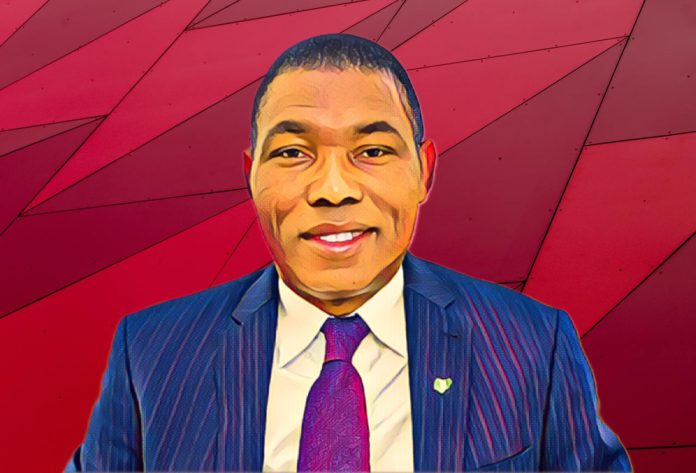
Prince Adewole Adebayo, leader of the Social Democratic Party and 2023 presidential candidate, has confirmed he will contest the 2027 election and leveled a pointed charge at Nigeria’s political direction: the country is not sliding toward a one-party state, as many fear, but toward something he considers more dangerous — rule concentrated in a single man.
Adebayo made the comments after returning from a visit to crisis-hit communities in Plateau State, where attacks on settlements including Angua Rukuba left families bereaved, traumatized and, in his words, feeling like stateless people who no longer believed any government was watching out for them.
“People were beginning to question the humanity of fellow human beings,” he said. “They were wondering if they were left alone.”
Adebayo on Plateau State: what he found
Adebayo said he went to Plateau not as a politician angling for votes but as someone who wanted to sit with victims, speak with security personnel and understand why the state’s response apparatus had failed. What he found disturbed him in ways that went beyond the widely reported killings.
“Apart from the publicly known, notorious, and sensational killings, there are several low-key killings going on in every part of the country that people have taken for granted,” he said.
“They feel: ‘What’s the point of talking? Let’s find local solutions, as nobody will listen to us.'”
He was direct in his criticism of President Bola Tinubu, who drew scrutiny for visiting an airport while Plateau communities were in acute crisis rather than driving the 18 minutes to the epicenter to speak directly with affected families.
“I was thoroughly embarrassed that the president failed in his leadership,” Adebayo said.
The one-man rule warning
On the larger political picture, Adebayo rejected the framing that Nigeria is on its way to becoming a one-party state dominated by the All Progressives Congress. He said the real threat is subtler and ultimately more corrosive.
“What Nigeria is at risk of is one-man rule,” he said. “If anyone in the APC thinks that Bola Ahmed Tinubu is trying to build a dominant one-party state, that is not the agenda. The real danger is a concentration of power in one individual.”
Adebayo argued that the APC itself would be the first institution to break under this dynamic. Unlike political parties in other democracies that have strong internal cultures and members who can challenge leadership, the APC under current conditions would hollow out as its members grow accustomed to taking instructions rather than exercising judgment.
“They will lose institutional strength,” he said. “The APC itself becomes the first casualty.”
The opposition is not yet a rescue
Adebayo did not spare the opposition from scrutiny. He acknowledged that parties like the African Democratic Congress were consuming themselves with legal battles over leadership, but urged their leaders to use the courts rather than the streets to resolve disputes. His broader concern was that Nigeria’s opposition bench lacks the discipline and ideology to mount a credible challenge.
He traced the rot to a shift that happened when businessmen and military-era contractors figured out that politics was more profitable than their previous ventures.
“Today, many politicians behave like merchants,” he said. “Like traders, they go where the price is lowest to buy and where it is highest to sell. There is no principle involved anymore.”
Voter disengagement, he warned, was the measurable consequence. Out of roughly 89 million registered voters in 2023, the largest single bloc simply did not vote. Adebayo said that number reflects how thoroughly the political class has disconnected from the actual concerns of ordinary Nigerians.
Running again in 2027
Adebayo said his 2027 campaign will carry forward the same central message from his 2023 run: farewell to poverty and insecurity. Both conditions, he said, have worsened since then.
He pushed back against the suggestion that visiting grieving communities was political theater.
“You can be a politician and still be a decent human being who genuinely wants to mourn with those who are mourning,” he said. “Politics is not on my mind at this stage; it’s just about the survival of the country.”

