

KEY POINTS
- UN Secretary-General António Guterres has called on South Africa to end xenophobic attacks on foreign nationals.
- He cited concerns over criminal acts and incitement to violence in KwaZulu-Natal and the Eastern Cape Province.
- Guterres welcomed the South African government’s commitment to the National Action Plan against Racism and Xenophobia.
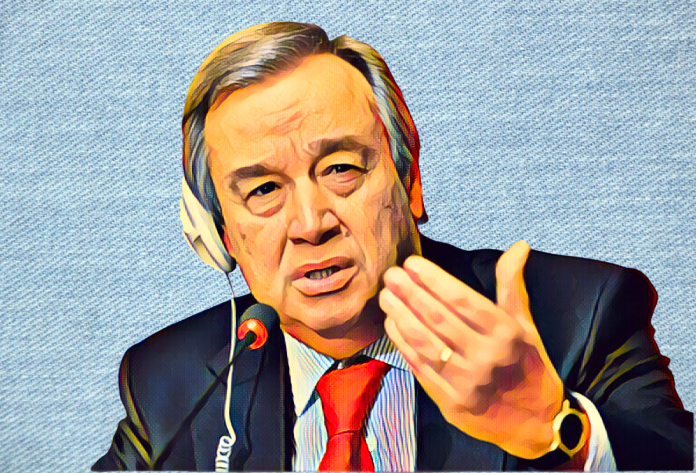
António Guterres, the United Nations secretary-general, has called on South Africa to put an end to xenophobic attacks and the intimidation of foreign nationals across the country. The intervention came on a Freedom Day weekend with fresh violence flaring in two provinces.
Stéphane Dujarric, the secretary-general’s spokesperson, issued the statement on Guterres’s behalf. The UN chief said he was deeply concerned and strongly condemned criminal acts and incitement to violence against migrants in parts of KwaZulu-Natal and the Eastern Cape Province. He framed the issue as a test of South Africa’s democratic conscience.
A reminder rooted in solidarity
Notably, Guterres reminded the international community that South Africa’s struggle against apartheid drew strength from global and African solidarity. He said the country’s modern development continues to draw on contributions from people across the continent.
“Violence, vigilantism and all forms of incitement to hatred have no place in an inclusive, democratic society,” Guterres said.
Furthermore, the secretary-general acknowledged the country’s complex socio-economic challenges. He welcomed the South African government’s commitment to its National Action Plan against Racism and Xenophobia.
A push for accountability
Specifically, Guterres pressed for prompt, independent and impartial investigations into recent violence against foreign nationals. The call signals that the UN expects accountability beyond statements and condemnations. He also urged regional partners to support South Africa in stopping the violence.
Additionally, the secretary-general extended Freedom Day greetings to the nation, framing the message as a reminder of the values that defined South Africa’s transition from apartheid.
A regional flashpoint
South Africa has been wrestling with intermittent flares of anti-foreigner violence for years, with attacks often targeting nationals from other African countries. Crucially, recent incidents in KwaZulu-Natal and the Eastern Cape have drawn renewed international scrutiny. The death toll, the economic damage and the diplomatic fallout all keep climbing with each new wave.
Migrant rights groups argue that economic pressure, high unemployment and political rhetoric combine to fuel attacks. However, civil society organizations also point to a pattern of impunity for perpetrators that prolongs the cycle. Notably, the violence rarely stays contained to one province for long.
Meanwhile, Nigeria’s federal government has separately demanded protection for its citizens after attackers killed two Nigerians in recent incidents. The wider diplomatic temperature is rising.
What comes next
With Guterres’s intervention now on the record, pressure on Pretoria to translate stated commitments into ground-level action is likely to intensify. Specifically, the response of South African authorities in the next few weeks will test how seriously the country treats its National Action Plan. The diplomatic price of inaction is climbing.
Beyond the immediate violence, the deeper question is whether South Africa can reconcile the demands of its own struggling citizens with the obligations the country accepted at the birth of its democracy. Guterres seems to believe that balance is still within reach, but only with action that follows the words. The world will be watching how Pretoria responds.